Autobayng News Team

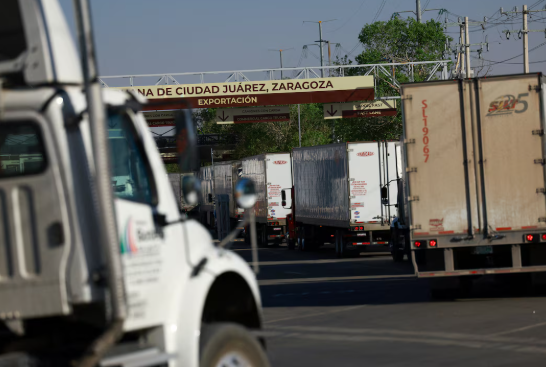 The US seeks a higher US-specific minimum content level, aiming to boost domestic manufacturing.
“>
US and Mexican negotiators begin formal talks to revamp the North American trade deal on Thursday, with Washington demanding stronger regional rules of origin including a US-specific minimum level of content for cars and trucks built in Mexico.
The new standard is contained in proposed texts to modify the US-Mexico-Canada Agreement (USMCA), two people familiar with the US negotiating position told Reuters.
The specific percentage of automotive content the US is seeking was not immediately available, but the shift is significant from the existing USMCA.
The six-year-old deal and its predecessor pact have created a highly integrated regional economy, underpinning nearly $1.6 trillion in annual trilateral trade, but its future hinges on negotiations over the coming months.
The deal requires 40 per cent to 45 per cent of the value of North American-built vehicles to be made in higher-wage factories, effectively in the US or Canada, based on a list of “core parts” including engines, transmissions, body panels and chassis components. But the US and Mexico are excluding Canada from the current talks, with plans for three bilateral negotiating rounds through late July, the US Trade Representative’s office said on Wednesday. This includes the current round of talks ending Friday in Mexico City.
A USTR spokesperson could not immediately be reached for comment after working hours on the rules of origin demands. US Trade Representative Jamieson Greer said on Tuesday he wanted to strengthen North American rules of origin to boost manufacturing in the United States.
“I think that over the course of these negotiations, we are going to be talking about rules of origin in a way that enhances US content in these goods,” Greer said.
Duty-free zone ends
Talks over the review are complicated by the Trump administration’s global tariffs of 25 per cent on autos and auto parts and 50 per cent on steel, aluminum and copper, effectively ending three decades of duty-free North American trade.
Greer said Washington will maintain at least some tariffs on Mexican and Canadian industrial goods, but possibly at preferential rates.
Dan Ujczo, a lawyer with Canadian oil and gas producer Cenovus Energy who specializes in North American trade, is optimistic that the US and Mexico, and eventually Canada, can overcome their differences to modify and extend the trade pact with stronger regional content rules and more trade protections against non-market economies such as China.
“The end game continues to be that Canada and Mexico have to be able to walk away with the most preferential access to the United States of any countries in the world in the medium term to long term,” Ujczo said.
More steel protections
Barry Zekelman, CEO of steel tube maker Zekelman Industries, said steelmakers were told on Wednesday that USTR negotiators will push for a requirement that Mexican and Canadian steel receiving preferential US tariff treatment be melted and poured in North America.
There is no such requirement in the current USMCA, and Zekelman told Reuters that it would reduce a flood of Chinese steel components into Mexican manufacturing operations.
USTR also wants Mexico to match US tariffs on steel imports and derivative products made from steel on imports from outside North America, Zekelman said.
“What they’re going to do now is start to close all of the loopholes that still exist,” he added.
- Published On May 28, 2026 at 06:33 PM IST
Join the community of 2M+ industry professionals.
Subscribe to Newsletter to get latest insights & analysis in your inbox.
All about ETAuto industry right on your smartphone!
- Download the ETAuto App and get the Realtime updates and Save your favourite articles.