Autobayng News Team

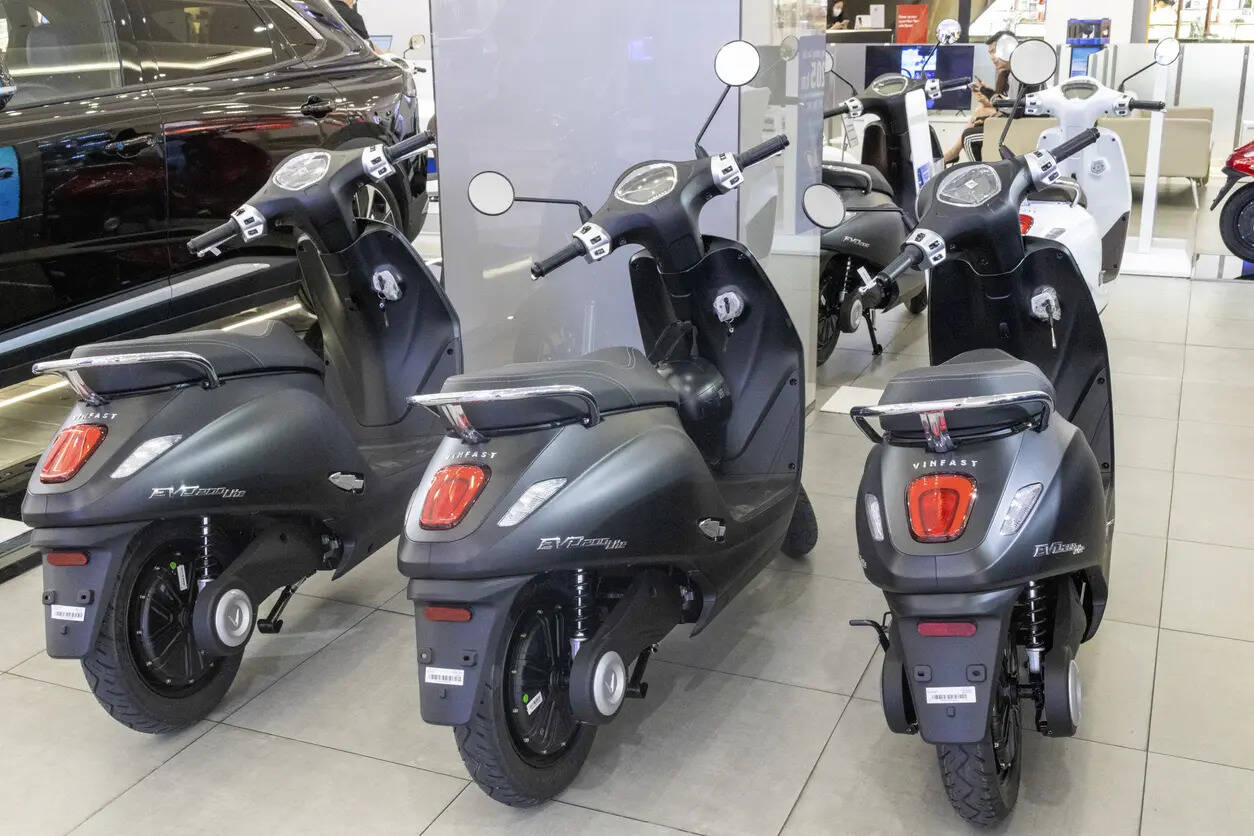 Smaller batteries, falling costs, and policy support keep e-two-wheelers affordable upfront.
“>
The Delhi government’s proposal to phase out ICE three-wheelers by 2027 and two-wheelers by 2028, under its draft EV Policy 2.0 is a bold and commendable step forward. However, it raises familiar concerns about ambition, consumer costs, and market readiness.
The central question, though, is whether a mandated transition in these segments would be economically disruptive. Evidence increasingly suggests it is not. In fact, in these segments, electrification is already financially viable, making the proposal less about forcing change and more about supporting a transition already underway.
The 2W and 3W segments are the right starting point
If any vehicle segments are ready for a faster shift to electric mobility, it is two- and three-wheelers. These are precisely the segments where the economics of electrification are strongest, because battery sizes are smaller, use cases are more standardised, and total cost of ownership (TCO) advantages emerge sooner than in larger vehicle segments.
For electric two-wheelers, relatively small battery packs help contain upfront costs, while battery prices continue to decline, and policy supports have steadily lowered the price consumers pay upfront.
A 2021 ICCT analysis showed that for several mid-range electric two-wheelers (125-150 km), incentives could accelerate upfront cost parity by 4-7 years, and in some cases parity could be achieved much earlier with state-level support. The upfront affordability challenge is shrinking, not static.
Just as importantly, high petrol prices make the operating economics of electric two-wheelers especially compelling. For high-utilisation drivers, whether commuters or delivery riders, fuel and maintenance savings outweigh higher purchase costs over time, making electric vehicles the better economic choice.
Three-wheelers make an even stronger case. Their use as passenger vehicles and for the movement of goods is highly standardised, with predictable daily duty cycles, high utilisation, and frequent stop-and-go operation, all conditions where electric drivetrains consistently outperform their petrol counterparts. That is a key reason electric three-wheelers now account for the majority of new three-wheeler sales in India. In such segments, the TCO advantage is not emerging; it is firmly established.
Electric 2W and 3W are already cheaper
Electric two-wheelers are already cheaper than petrol two-wheelers on the basis of their TCO. ICCT estimates show that an electric scooter costs ₹2.7/km, while a petrol scooter costs ₹4.5/km. In the motorcycle segment, EVs cost ₹2.8/km, while petrol models cost ₹3.8/km. Overall, electric two-wheelers offer 26-39 per cent cost savings for consumers. National-level subsidies under the PM E-DRIVE scheme and the proposed subsidies offered under the draft Delhi EV policy further enhance the economic attractiveness of electric two-wheelers. Potential savings are further enhanced when these vehicles are deployed in commercial operations such as last-mile delivery and ride hailing. In the three-wheeler auto-rickshaw segment as well, TCO parity with CNG models has already been achieved.
When policy meets the market
India is by far the world’s largest market for electric three-wheelers. Delhi already reflects this reality: In FY26, 5,021 electric autorickshaws were sold in the city, representing 45 per cent of all three-wheeler sales. This shows that the market is already moving strongly towards electrification. In this segment, policy is clearly catching up with where the market is already headed.
Similar signals are emerging in the two-wheeler market. Indian consumers bought close to 20 million new two-wheelers in FY25, with electric models accounting for about 6.2 per cent of new sales. Scooters, which make up around 36 per cent of the market, have led this transition, showing that electrification is already gaining ground in one of the country’s most price-sensitive vehicle segments. This suggests the shift is increasingly supported not just by policy, but by market economics.
Technology improvements are reinforcing this momentum. Consider the evolution of the TVS iQube, one of India’s leading electric two-wheelers. Within a few years, the model’s battery capacity has increased dramatically and its driving range has improved nearly threefold.
This is a clear example of how product performance is improving rapidly, making electric two-wheelers increasingly attractive for everyday use. With battery capacities of leading electric scooters now in the 2-3.6 kWh range and typical ranges of 100-150 km, the market is steadily resolving concerns around cost and usability.
The transition is also beginning to extend beyond scooters. While electric motorcycles currently account for only about 1.7 per cent of the electric two-wheeler market, the segment is starting to diversify, with manufacturers offering models across a wider range of performance levels, including higher-powered categories.
This is important in a market where motorcycles account for nearly 60 per cent of ICE two-wheeler sales. While electrification has so far been scooter-led, early signals in electric motorcycles suggest the market is beginning to move towards deeper electrification.
Taken together, these trends show policy is not distorting markets, but reducing information gaps and overcoming inertia in a transition that is already underway.
Broader benefits beyond economics
Beyond economics, prioritising two- and three-wheelers also delivers wider benefits for air quality, energy security, and climate goals. Despite tighter emission norms, two-wheelers continue to contribute significantly to urban air pollution because of their large share in the vehicle fleet, making electrification particularly important for cities like Delhi.
The energy security case is equally strong: Earlier ICCT analysis shows that reaching 60 per cent electric two-wheeler penetration by 2030 could avoid nearly 49 million tonnes of oil equivalent and generate fuel savings of about ₹7.01 lakh crore, while also reducing tailpipe CO₂ emissions by nearly 42 per cent.
From first steps to a broader pathway
None of this suggests the transition is without challenges. Charging infrastructure, particularly for dense urban neighbourhoods, commercial fleets, and last-mile operations will need to expand in step with vehicle adoption.
That requires careful planning. But implementation challenges are manageable. As experience is built in two- and three-wheelers, the government could also consider, over time, extending phase-out pathways to other vehicle segments where economics and readiness begin to support it. When the cleaner option is also the cheaper one, the question is no longer why mandate the transition, but why postpone it.
(The authors are New Delhi-based researchers with the International Council on Clean Transportation, India. Views are personal.)
Join the community of 2M+ industry professionals.
Subscribe to Newsletter to get latest insights & analysis in your inbox.
All about ETAuto industry right on your smartphone!
- Download the ETAuto App and get the Realtime updates and Save your favourite articles.