Autobayng News Team

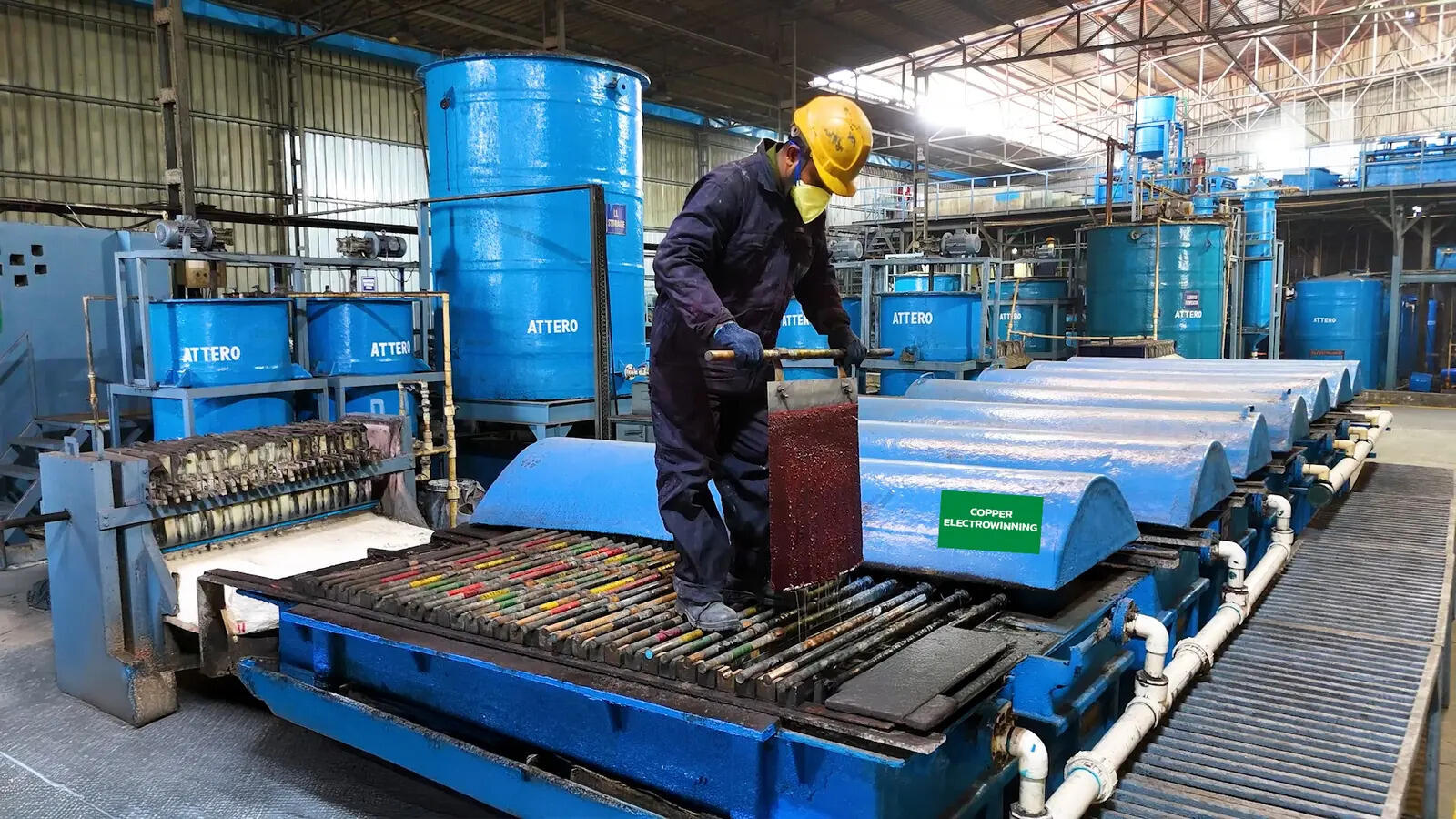 Attero is promoting the circular economy by extracting critical minerals like lithium, cobalt, nickel, copper, gold, and rare earth elements from electronic waste and used batteries.
“>
As the world marks Environment Day, sustainability is increasingly moving beyond boardroom commitments and regulatory checklists to becoming a core business strategy.
Across industries, companies are reimagining how energy is consumed, waste is managed, materials are sourced and ecosystems restored. The common thread is clear: Sustainability today is not merely about reducing environmental impact but about creating resilient, resource-efficient, and future-ready businesses.
The shift is visible across the value chain. While reducing carbon emissions remains a key priority, companies are increasingly focusing on circularity, renewable energy, water conservation, sustainable packaging, waste recovery, and digital traceability to deliver measurable environmental outcomes.
Decarbonisation beyond factory gates
For many organisations, the next phase of climate action extends beyond their own operations. According to Schneider Electric India, while reducing Scope 1 and 2 emissions remains important, addressing Scope 3 (emissions) across supply chains has emerged as the next frontier.
Through its zero carbon pathway initiative, the company is working with over 1,500 suppliers to accelerate decarbonisation across its value chain and drive meaningful progress beyond their own operations.
“Advancing energy technologies through electrification, digitalisation, automation and AI-driven energy management is helping organisations make energy use more visible, actionable, and efficient while delivering measurable sustainability outcomes,” said Venkat Garimella, Vice-President – Sustainability, Schneider Electric.
Schneider Electric India now sources 99 per cent of its electricity consumption from renewable sources and has reduced over 82 per cent of its Scope 1 and 2 emissions. Sustainability principles are also being embedded into product design, sourcing, packaging, and resource recovery, with 85 per cent of product packaging meeting sustainable packaging criteria in 2025, leading to reduced virgin material usage and improved resource efficiency.
Building value from waste
Perhaps the strongest evidence of the circular economy in action is emerging from India’s recycling ecosystem.
Attero is demonstrating how waste streams can become strategic sources of critical minerals. Through proprietary recycling technologies, the company recovers lithium, cobalt, nickel, copper, gold, and rare earth elements with recovery efficiencies of up to 98 per cent and purity levels reaching 99.9 per cent.
The environmental gains are substantial. Recycled lithium carbonate reportedly carries a 99 per cent lower greenhouse gas footprint than conventionally mined alternatives, while recycled graphite and copper reduce emissions by 98 per cent and 68 per cent respectively.
“India’s sustainability journey is not just about managing waste better. It is about reducing import dependence, lowering emissions, and building a resilient domestic supply of critical materials,” said Nitin Gupta, co-founder and CEO of Attero.
The company’s digital platforms – Selsmart and MetalMandi – are also helping formalise material collection and improve traceability, two critical requirements for scaling circularity.
Electrifying mobility, cutting emissions
India’s electric mobility transition is beginning to generate measurable environmental outcomes.
Tata Power, through its EV charging network, has enabled more than 7.5 lakh charging sessions and facilitated over 414 million green miles, helping avoid approximately 50,000 tonnes of tailpipe carbon dioxide emissions.
The company continues to expand its charging footprint across urban centres and major transport corridors, adding new charging stations in Pune, Kolkata, and along the Ahmedabad-Vadodara Expressway.
With EV sales crossing 2.55 million units in FY 2026, the challenge is no longer limited to vehicle adoption. The focus is increasingly shifting to building reliable charging infrastructure capable of supporting long-term growth.
Today, Tata Power EZ Charge operates over 5,800 public charging points across more than 700 cities and towns. In addition, the network supports EV adoption through more than two lakh home chargers and over 1,200 e-bus charging points nationwide.
Restoring ecosystems through technology
Sustainability is equally about protecting natural resources and strengthening climate resilience.
Bosch Global Software Technologies reports creating nearly 300 million litres of water storage capacity and enabling the potential conservation of around one billion litres through its environmental sustainability initiatives during FY 2025-26.
Its programmes include afforestation across more than 825 acres, plantation of 17,000 saplings and processing over 475 tonnes of waste. It also factors in the restoration of Bengaluru’s 26-acre Choodasandra Lake where water-holding capacity increased by 45 per cent, benefiting about 3,000 households.
The company is leveraging technology for sustainable agriculture through its farm precise programme integrating IoT sensors, satellite imagery and AI-based crop intelligence to improve water efficiency and farm productivity.
“This World Environment Day, under the theme ‘Inspired by Nature. For Climate. For Our Future,’ we reaffirm that true innovation creates lasting value for both society and the planet,” said Shilpa Deodhar, Head of Corporate Social Responsibility, Bosch Global Software Technologies.
The missing link: Traceability
Yet, even as sustainability initiatives scale up, experts argue that one of India’s biggest environmental challenges remains largely invisible.
Every day, thousands of automotive workshops generate waste lubricants, spent coolants, oily wastewater and contaminated materials. Among these, used lubricant oil remains one of the least monitored waste streams.
India consumes nearly 2.9 million tonnes of lubricants annually and generates an estimated 1.3 million tonnes of used oil. However, only about 0.1 million tonnes is properly re-refined, while much of the remainder is burnt, dumped, or channelled into informal markets.
India has more than 200,000 independent auto repair shops, with the vast majority operating informally with no tracked disposal route. The implications are severe. A single litre of used oil can contaminate up to one million litres of water.
“India does not have a recycling problem as much as a visibility problem,” said Vijay Gummadi, Founder and CEO of Autorox. “You cannot recycle what you cannot see”.
According to industry estimates, re-refined base oil (RRBO) requires up to 66 per cent less energy and carries an 81 per cent lower carbon footprint compared with virgin oil derived from crude. However, scaling this opportunity requires digital traceability, formal collection networks and greater industry awareness.
The challenge is likely to intensify with the growth of electric mobility. While EVs reduce tailpipe emissions, they introduce new waste streams in the form of batteries, thermal-management fluids, high-voltage components, and rare-earth materials, all of which require robust end-of-life management systems.
Sustainability’s next chapter
The sustainability conversation is clearly evolving. Carbon reduction remains important, but businesses are increasingly being measured by how effectively they manage resources, recover materials, conserve water, build resilient supply chains and enable circular economies.
The companies leading this transition share a common belief: Environmental responsibility and business growth are no longer competing objectives. Whether through renewable energy adoption, critical mineral recovery, EV infrastructure, ecosystem restoration, or waste traceability, the focus is shifting from commitments to measurable impact.
On this Environment Day, one message stands out: The future of sustainability will belong not to those who simply reduce harm but to those who redesign entire systems to create lasting environmental and economic value.
Join the community of 2M+ industry professionals.
Subscribe to Newsletter to get latest insights & analysis in your inbox.
All about ETAuto industry right on your smartphone!
- Download the ETAuto App and get the Realtime updates and Save your favourite articles.