
 Autobayng News Team

Felipe Massa’s claim over how the 2008 Singapore Grand Prix affected his chances of winning the Formula 1 world championship the same year has been sent straight from the High Court to the Supreme Court. Oliver Cooke, a managing associate at Penningtons Manches Cooper LLP, looks into the potential implications for F1.
The long-running ‘Crashgate’ saga took a surprising turn last month which will lead the legal row arising from it over the rightful winner of the 2008 Formula 1 world championship to the highest court in England.
The Supreme Court has agreed to hear the next step in Felipe Massa’s case against Formula One Management Limited, Bernie Ecclestone, and the FIA, leapfrogging the Court of Appeal. The decision appears to have come about based on the principle that the highest court in the land should hear the question, as it is a matter of general public importance.


The three parties are seeking to appeal the decision of the High Court that allows Massa’s claims for damages from them to proceed to a full trial, after some of his other claims (such as various declarations including that he “would have” won the 2008 F1 Drivers’ World Championship if it had not been for Crashgate) had been dismissed. This hearing will follow the Court’s order that the defendants pay £250,000 towards Massa’s legal costs to date.
Whilst professional sports and the courts are no strangers, this development perhaps puts that relationship into the legal spotlight more than ever before. Despite Massa’s legal claim for declarations that he would have been crowned 2008 Champion being dismissed, the possibility of a judgment for damages in his favour in an eventual trial raises difficult questions about the integrity of results, and may impact how other past controversies are revisited, or sought to be righted in the courts.
Advert | Become a RaceFans supporter and
What is Massa claiming (and why)?

In short, Massa claims that had Crashgate been properly investigated, he would have been crowned 2008 world champion. He also says that the reason it was not properly investigated was because of a deliberate cover-up perpetrated by various senior figures in F1.
He wants the court to make certain declarations that, whilst not stating he is or was 2008 champion, that he “would have” been. He also claims that had he won, he would have received a higher salary going forward, as well as increased sponsorship income and the like, so claims damages on that basis.
What the High Court were asked to do and what they decided
The defendants asked the High Court to decide Massa’s claims at an early stage in their favour because, they said, for various technical legal reasons, they had no hope of succeeding.
The High Court agreed with them about some of Massa’s claims, but it did not agree that all of his claims, including some for damages, be dismissed at that stage. Claims for damages therefore continue, however the defendants are appealing and argue that the High Court got it wrong and those claims should be dismissed too. If the defendants win, Massa’s claims will be at an end. If they do not, Massa’s claims will continue to a full trial.
Advert | Become a RaceFans supporter and
Why Massa cannot rewrite the 2008 title – but can still claim damages
For many fans, the instinctive question is: if Massa is given a chance to succeed in obtaining damages, why could he not be given a similar chance in obtaining the declarations he seeks? If he wins the case, does that not lend credence to the notion that he really was the winner of the 2008 championship?
Various reasons were given for that by the Court, but one that stands out is what the impact would be if the declarations claims were allowed to continue and succeeded. The Court held that even though Massa and his legal team had carefully asked the Court to make declarations that he “would have” been 2008 World Champion, rather than that he “was” 2008 World Champion, it was inevitable that if he had succeeded, the latter is how Massa would “present his victory [in court] to the world”. This would go against the principles the Court seeks to generally uphold in similar situations and would not practically achieve the end Massa truly sought, as the FIA could and would simply ignore the declaration, and Lewis Hamilton would remain the champion of record.
International sport is built on the principle that results become final once the relevant protests, stewarding processes and appeals are exhausted . The FIA’s international sporting code and Formula One sporting regulations are structured to avoid championships being reopened years later. Courts in England have generally been reluctant to rewrite sporting results too, preferring to respect the decisions of regulatory bodies having jurisdiction over their sports. The Court did however rule that this did not affect Massa’s other claims, including some of the damages claims, allowing him to continue to claim damages at trial (unless the Supreme Court overturns the High Court’s decision).
One of the strongest grounds against one of the damages claims that survived was that Massa had delayed bringing it, or had brought it too late. In law, parties are barred from obtaining relief in respect of claims that they bring too long after the claims arise – this is called limitation. The limitation period for many (but not all) claims is six years. However, that period can be extended where facts are deliberately concealed and cannot reasonably be identified by the Claimant – and here Massa alleges that the defendants, in breach of various obligations they were obliged to comply with, conspired to cover up certain facts which had he known about, he said would have allowed him to bring a claim earlier than he did (and that he brought his claim as soon as he knew about the relevant facts). There is therefore a legal argument that his claim should still be allowed despite being late.
Advert | Become a RaceFans supporter and
What is the legal concept of “unlawful means conspiracy” and why does it matter for F1 insiders?

Massa’s case is based on the argument that delays in investigating Crashgate until it was too late to have a bearing on the results of the 2008 season were unlawfully deliberate (in that they were committed in breach of various obligations the perpetrators owed) and constituted a plan by senior figures within F1 to knowingly allow a manipulated race result to stand. This he says amounts to ‘unlawful means conspiracy’.
To establish a claim for unlawful means conspiracy, Massa must broadly prove that:
- two or more people agreed on a course of conduct;
- those people took concerted action on the agreed course of conduct;
- the plan used unlawful means – which could include breaches of contractual or other legal duties, regulatory rules, or conduct amounting to a crime;
- they intended to cause him harm; and
- harm was suffered as a result of that agreement
If an English court were to uphold a conspiracy claim in this context, the ramifications could extend beyond the named defendants:
- Regulators and officials: senior FIA or FOM officials could, in principle, face follow on litigation, or be included in Massa’s claim, as a result of what is revealed about their involvement in the scandal. If they were not truthful at the time of the events, and were called as witnesses if there were to be a full trail, they could be exposed to legal risk.
- Commercial stakeholders: With F1’s growing global commercial appeal, the commercial stakes involved in participating in it have never been higher – damage to its reputation (for example around its sporting integrity, weakness in processes, a culture of corruption, or reputation of any senior figures who were around at the time of the Crashgate scandal) could negatively affect that, leading to less money for the series and the teams.
- Culture and governance in sport: a clear signal would be sent that sporting decision-making is not exempt from normal civil law obligations, echoing earlier cases which confirmed that sporting bodies can be subject to judicial scrutiny where fairness and due process are in question – indeed, if the Supreme Court have allowed the leapfrog because this is a matter of general public importance, the message for future athletes, sporting organisations, and industry participants, is clear.
Advert | Become a RaceFans supporter and
What a Supreme Court appeal really means
The move to seek permission to appeal to the UK Supreme Court suggests they are challenging a point of law with wider implications, such as when national courts should intervene in disputes rooted in an international sport’s own regulatory system; how they should consider such disputes when they do; and what factors they should have in mind, in such disputes.
If permission is refused, the case proceeds towards full trial. If granted, the Supreme Court may throw Massa’s case out. With the Supreme Court being the most superior court in England and Wales, its decision here could become a key authority for future cases.
How a potential Massa victory could impact how we approach sporting disputes
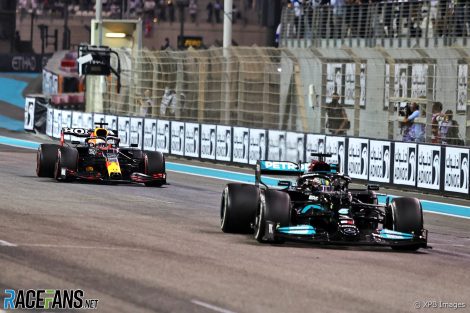
If Massa ultimately succeeds, it would signal that historic F1 controversies can still have legal consequences over 15 years after the season’s conclusion, and those consequences can be serious, and potentially give rise to doubt about what the ‘true’ result is or should have been, even where ultimately, the official results remain unchanged. If Massa was to win only his claim for damages, it could potentially, in the mind of many fans, lend legitimacy to the notion that the official results of the 2008 Championship are ‘wrong’, and Massa was the real champion.
At the same time, this case increases pressure on the FIA and F1 to ensure disputes are dealt with openly, decisively and within a timely manner. It is in the interests of the FIA and F1 to resolve disputes within the confines of the sport’s regulations as with the Pierre Gasly Monaco penalties saga, overseen through stewards’ reviews and appeals. Mercedes Team Principal, Toto Wolff, has commented that “if there’s a civil case behind [Massa’s claim], it would certainly set a precedent, whatever it is. We are looking from the sidelines with curiosity”. This highlights the significant impact that the outcome of this case could have on the F1 scene, and all teams are keeping a watchful eye on what happens next.
Massa’s claim is a reminder that if participants lose confidence in the system, the next step may be the High Court – years after the chequered flag. It remains to be seen whether future disputes will remain in the hands of stewards and regulators, or increasingly become battles for lawyers instead.
Advert | Become a RaceFans supporter and
Formula 1
- Bahrain still pushing to hold cancelled 2026 race in October
- 34 races on 2027 calendar? Formula 1 tipped to announce 10 sprint races next year
- Russell admits he is “still struggling” to understand Mercedes’ car
- British GP win answers the ‘negative narratives’ about me says Leclerc
- Sainz penalised one lap for illegally overtaking Safety Car

