

 Autobayng News Team

It remains a confusing situation, but the strait of Hormuz now appears to have been closed twice. Once by Iran, and then by the US, which this week announced a blockade of its own on the reduced number of ships using Iranian ports. Higher fuel and energy costs for ordinary people across the world are the headlines, but as the war on Iran enters its sixth week, shipping restrictions and strikes on energy facilities in Gulf countries are affecting some of the poorest and most vulnerable economies in the world in more profound ways.
I spoke to Dr. Zainab Usman, senior research scholar at the Centre on Global Energy Policy at Columbia University, about how the war and its blockades are affecting some African countries.
A global shock
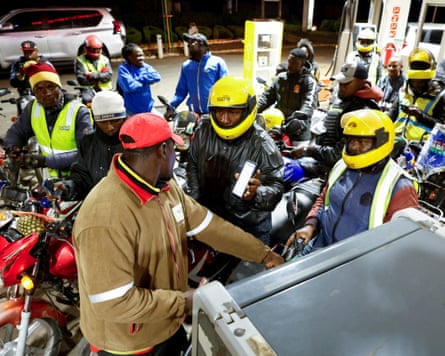
“It’s very important”, Dr Usman stresses, “to understand that while the obstruction of shipping has affected the entire world, that particular choke point” in the Middle East, “accounts for 20% of the world’s shipment of crude oil, and a good chunk of that goes to Asia and parts of east Africa.” And so, it is countries closer to the strait and the Indian Ocean that have been affected the most. Ethiopia, Kenya, Egypt, and some parts of southern Africa, are already experiencing fuel shortages. Countries facing the Atlantic Ocean on the west coast of Africa have not suffered from similar supply disruptions. However, a hike in fuel prices is landing across the continent. Costs have risen, Dr Usman told me, anywhere between 30 and 70%, and at the most extreme end, up to 150% in Somalia.


But there is another distinction that means the impact of the war is more severe for some.
Oil importers hit hardest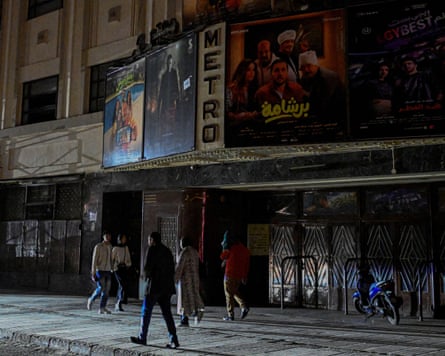
“I would divide African countries broadly into two categories”, Dr Usman said. “One would be oil-importing countries in the east and some parts of north and southern Africa. And then those that are oil-producing countries,” such as Nigeria, Angola, Gabon and Congo-Brazzaville. The former import all the oil they consume, and are doubly affected if their supplies come through the Gulf. Egypt, for example, has already passed energy saving measures reducing street lighting, and passed a decree stipulating that shops, restaurants, shopping centres, cinemas, theatres, and wedding halls shut down at 9pm to save electricity.
But oil-exporting countries, Dr Usman said, are “still not immune from the crisis”. They are being affected not through supply shortages, but the general global hike in fuel prices brought about by the political shock from events in the Middle East. Nigeria has one of the largest oil refineries in the world but people are still paying more for fuel. “The interesting thing about rising energy costs around the world is they have inflationary impacts,” Dr Usman said. Energy is needed for daily activities: for electricity, for fuel for your car. In the immediate term, “the impact is quite hurtful to households, businesses, and the budgets of governments”.
A food crisis is not inevitable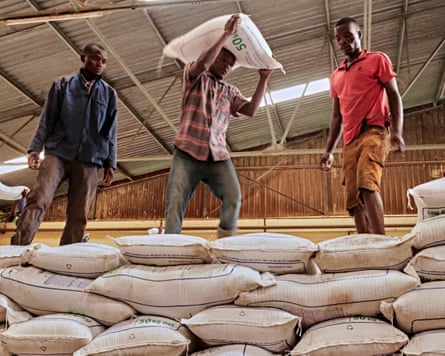
There is a tendency, she tells me, that where poorer countries are concerned, to catastrophise. There is a global shock and immediately people “start projecting disaster, famine, hunger. We did this during the early days of the war in Ukraine. There were challenges in getting certain oils and grains, but projections of widespread hunger did not pan out. There are nuances to take into account”. (This point reminds me of how the Covid-19 pandemic was less deadly in Africa than anticipated, and in fact, less severe compared to places with more advanced health systems).
The strait handles the shipment of supplies for commodities beyond oil and fuels, with fertiliser among the key resources passing through the shipping lane. But the impact of fertiliser shortages on Africa is, at the moment, overestimated, Dr Usman said. “Unlike the immediate impact of reduction of fuel supplies, the use of fertiliser is seasonal and just because there’s a disruption now doesn’t mean that farming and harvesting and output is affected. A lot of poor countries in Africa and elsewhere tend to have economies that are heavily agricultural”, and so “they do take storage seriously”. Even if this conflict becomes prolonged, some countries will be able to tap into the supplies they have stored. “I would be cautious,” Dr Usman said, in projecting food insecurity.
Rising risks and opportunities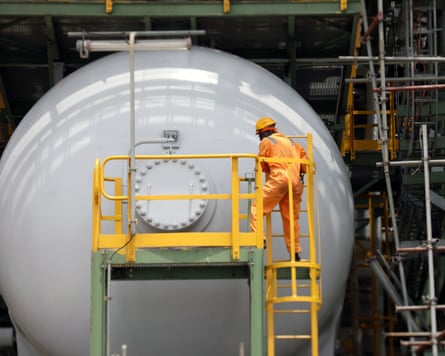
“If this conflict becomes prolonged, then we are looking at deeper impacts on African economies,” Dr Usman said. One would be that governments will start thinking about cushioning the higher prices across the board that arise from higher energy costs, and so would raise subsidies. “Subsidies are quite expensive and would put a strain on budgets,” Dr Usman said.
If the conflict continues we could begin to see a disruption in supplies, even in countries that are oil-rich. “You have to remember that some of these countries don’t have sufficient refining capacity to convert the crude oil they extract into the refined products used daily. They will then have to supplement their domestic production with imports. That is the case in quite a number of countries in west and central Africa.”
But there is a third, longer-term implication that is not necessarily a negative. “Many countries now realise that energy security should be top of mind for them. Before this crisis, energy policy was mostly around how do we make electricity affordable, reliable, accessible, with energy procured from clean sources that do not add to greenhouse gas emissions. Now, many policymakers, are rightly in my view, going to focus on energy security that looks beyond developmental goals. We have to think in realpolitik terms – how do we ensure vulnerability to external shocks and things we cannot control.” This may mean an orientation towards African countries “harnessing their own domestic resources”, and investing in their regional refining and processing capacity.
Hostages to peace
But a final implication still lurks in the background. If the conflict and shipping constraints continue, stores of fertiliser run out, and the farming season is afoot, there is risk of weaker harvests and poor availability of food.
But “we are not there yet”, Dr Usman said. Which is an apt summary of how the Middle East crisis is splitting those it affects into two – those for whom the impact has already arrived, and those who are not there yet, hostage to a de-escalation that is always imminent, but never seems to arrive.
