
 Autobayng News Team
 The 641-hp Genesis GV60 Magma borrows the Ioniq 5 N recipe but swaps boy-racer edge for grown-up polish and a suede-lined cabin PROS ›› Bold looks, great power, engaging drive, good sounds Genesis is growing up fast. Hyundai’s luxury arm has walked back its previous commitment to building only EVs, with hybrids and range-extenders now in development, and it officially launched the Magma brand in late 2024 to head up the performance side of things. What exactly is Magma? You could think of Magma as the company’s equivalent to Hyundai’s N division or BMW M, committed to building vehicles that deliver immense power combined with exceptional control, without ruining the luxury experience buyers expect from a Genesis. Also: GV60 Magma Arrives In America With 641 HP, But You Can Only Get It In Three States Not only is Magma focused on delivering performance cars for the streets, but also at the racetrack. It recently made its 24 Hours of Le Mans debut with the GMR-001 hypercar, and is toying with the idea of GT3 racing, too. Its first global production model is the GV60 Magma, and we recently had the opportunity to experience it first-hand. As a glimpse into the brand’s future, it’s a very exciting time. In Australia, Genesis has launched the GV60 alongside the new rear-wheel drive GV60 Advanced. This high-powered, performance model has been a long time coming, launching more than two years after the related Hyundai Ioniq 5 N. Priced from AU$130,000 (US$90,300) before on-road costs, making it roughly AU$20,000 (US$13,800) more expensive than the Hyundai. Review: The 2027 Genesis GV60 Is Brilliant, But It Will Never Be A Big Seller Genesis has also confirmed US pricing for the 2027 GV60 Magma, and the number is a lot friendlier than the Australian figure suggests. It starts at US$69,950 before a US$1,545 destination fee, which is US$17,425 more than the base 2026 GV60 and US$10,050 more than the Hyundai Ioniq 5 N it shares so much with. The performance version of the GV60 has been a long time coming. It follows a familiar recipe to the Ioniq 5 N and Ioniq 6 N, rocking twin electric motors that combine to deliver a peak 478 kW (641 hp) and 790 Nm (582 lb-ft) of torque. It’s the first model launched by Magma and is a sign of things to come with other performance cars. Crucially, Magma should not be considered in the same vein as Hyundai N, as it has a different philosophy: it’s eager to retain the luxury and refinement it’s known for, while adding some extra thrills. Like Hyundai N’s two high-powered EVs, the GV60 Magma also has plenty of party tricks, but more on those later. It looks like a proper performance car, too. It’s wider than the standard version, sits lower, has distinctive bumpers, forged 21-inch alloy wheels, and a mean-looking spoiler at the rear. A Properly Sporty Cabin The GV60 Magma has launched alongside the regular, facelifted model, and as such, benefits from all the same updates. These include a new, single 27-inch-wide screen housing the instrument cluster and the infotainment display. Crucially, Genesis has made it feel much more special than a run-of-the-mill GV60. Among the key features are 10-way adjustable sports bucket seats, distinctive white contrast stitching and piping, and a unique steering wheel, complete with a bright orange Magma dial and a Boost button. Adding to the premium feel is brushed black aluminum trim. Sadly, there’s no white interior option like the standard model. Boosting the premium feel of the Magma’s cabin is black suede-like Chamude material on the door panels, seats, and headliner. All in all, it feels like a genuine premium place to sit and, perhaps most importantly, has bucketloads of character, which isn’t something that can be said about most EVs. Dive into the menu, and there’s a dedicated Magma section to play with all the extra settings and to view live performance metrics. It’s far less complex than the system used by the Ioniq 5 N and Ioniq 6 N, offering fewer areas of adjustability and not having all the same track-focused settings. Standard driving modes available include Range, Comfort, Sport, and the configurable My Drive Mode, as well as two models should you want to have ramp-up fun. Review: More Porsche Than Hyundai, The Ioniq 6 N Is A Masterstroke Genesis has stressed that the GV60 Magma is not supposed to be as extreme or as focused as something like the Hyundai Ioniq 5 N or Ioniq 6 N. As such, it includes a special GT model, which can be engaged with either the virtual gear shifts or without, and amps up the powertrain and steering systems. Similarly, the ‘active sound design’ system can be easily toggled on and off. If that’s not enough, there’s also a Sprint mode which puts everything into the most aggressive setting, as well as a Drift mode and battery conditioning settings for drag racing and long stints on a racetrack. Compared to the Ioniq 5 N and Ioniq 6 N, the GV60 Magma does not have the same number of dizzying, performance and track-focused menus. It’s also not quite as configurable, which, again, is no bad thing, and underscores the EV’s slightly more poised and refined focus. Whereas the N products have more of that boy racer edge, the GV60 Magma will be better suited to the distinguished gentleman or CEO who wants something that makes a statement, is fun to drive, but doesn’t have the same hard edge. So, How Does It Drive? As you’d imagine from the headline figures, the GV60 Magma is a truly ferocious performer and yet somehow manages to retain most of the standard model’s levels of refinement. Grip is tenacious. Sitting on bespoke Pirelli P Zero Elect rubber, the GV60 Magma hides its weight extraordinarily well, and thanks to the shorter wheelbase than the Ioniq 5 N, feels more compact on twisty roads. Crucially, the Magma is an enjoyable car to drive at speed, while still remaining comfortable. With that being said, the ride is quite firm, even in Comfort mode, but it’s certainly comfortable enough for everyday driving. Genesis has fitted similar stroke-sensing electronically controlled suspension as is found in the Ioniq 6 N. If you want a GV60 that prioritizes a pillowy ride, well then the standard model will be better suited. The soundtrack is not quite as dramatic as the N products, but it’s still way better than any other EV out there trying to replicate the sound of an ICE. Compared to the new 6 N, for example, the faux exhaust backfires are nowhere near as loud, although they still sound surprisingly authentic, even though they are slightly muffled by the speakers. However, the soundtrack can have an annoying drone if left in its loudest setting and while cruising. Magma has also made the note a little different than the Hyundais, aiming to replicate a six-cylinder rather than a turbocharged four-cylinder. It also ‘revs’ to 9,000 rpm and includes exterior speakers, so those around you can hear it too. For those who want their EV to sound like an EV, therefore remaining completely silent, the sounds can easily be switched off in the menu. Another area of the driving experience that Genesis has nailed, just as well as engineering teams from Hyundai’s N division, is the simulated gear shifts. As with the Ioniq 6 N, which includes eight gears, the GV60 Magma is the same. They deliver the same kick through the chassis while shifting between the different ratios, really boosting the experience. Read: GV60 Magma Arrives With 641 HP, But You Can Only Get It In Three States Given the performance figures, it is suitably ferocious in a straight line. Genesis quotes a 0-100 km/h (62 mph) time of 3.4 seconds, and that’s exactly how quick it feels. We tested it in the wet, and recorded a time of 3.7 seconds with a GPS timer, so the claim will definitely be achievable in the dry. If you’re seeking maximum acceleration, the Boost button on the steering wheel adds an extra 30 kW (40 hp) and 50 Nm (37 lb-ft) of torque for 15-second bursts. While those gains may not seem all that significant on paper, you can really feel the extra punch while behind the wheel. In Sprint mode, Boost kicks in automatically once you press the throttle beyond 90 percent. It’s also used with Launch Control. As with other EVs with similar power levels, extracting the Magma’s performance credentials on the road is difficult, and would really only be something that’s achievable on a track. It’s an all-round phenomenal performer, delivering driving thrills that most other EV makers can only dream of achieving. The brakes are also tremendous. It rocks huge 400 mm (15.7-inch) discs at the front with four-piston calipers, while positioned at the rear are 360 mm (14.1-inch) discs with single-piston calipers. These mechanical brakes work alongside the regenerative braking system, allowing the Magma to pull up from 100 km/h (62 mph) in just 33.8 meters. What About The Normal EV Stuff? A high-performance EV like this also offers a duality which is hard to replicate with similarly powerful combustion-powered vehicles. Shift out of GT, Sprint, or Sport mode, and engage Range or Comfort, and the GV60 Magma goes silent, gliding over the tarmac as well as any other luxury crossover. When not using the paddle shifters to change gears, they’re tasked with adjusting the regenerative braking. As in the standard GV60, the Magma includes three levels of regen, in addition to a full one-pedal driving mode. It also offers an automatic mode that tweaks the regen depending on navigation information, map data, and traffic flow. The downside of all the performance is efficiency, or lack thereof. Genesis quotes a combined efficiency rating of 21.5 kWh/100 km, giving the GV60 Magma a driving range of 425 km (264 miles). However, during our time with it, which included the single-day launch event and several days post-event living with one, that figure was closer to 27 kWh/100 km, reducing the driving range to just over 300 km (186 miles), which is poor. On the plus side, the Hyundai group’s E-GMP, 800-volt electrical architecture does allow the Magma to charge quickly. Plugged into a 350 kW DC charger, where it can peak at 265 kW, a charge from 10-80 percent takes just 18 minutes. Verdict Genesis has a difficult task ahead of it. By automotive standards, it remains a relatively young player and has a lot of work to do before the average punter will view it in the same regard as BMW, Mercedes, Audi, or even Lexus. One could argue it’s launched the Magma brand a little too early and may have too much on its plate. However, setting these challenges aside, there’s no denying the GV60 Magma is excellent. It will not be a high-volume seller, nor will the updated 2027 GV60 either, but it does a brilliant job walking the fine line between performance and poise. It feels more grown-up than the Ioniq 5 N and yet is just as enjoyable to drive. The future of the Magma brand is shaping up nicely. 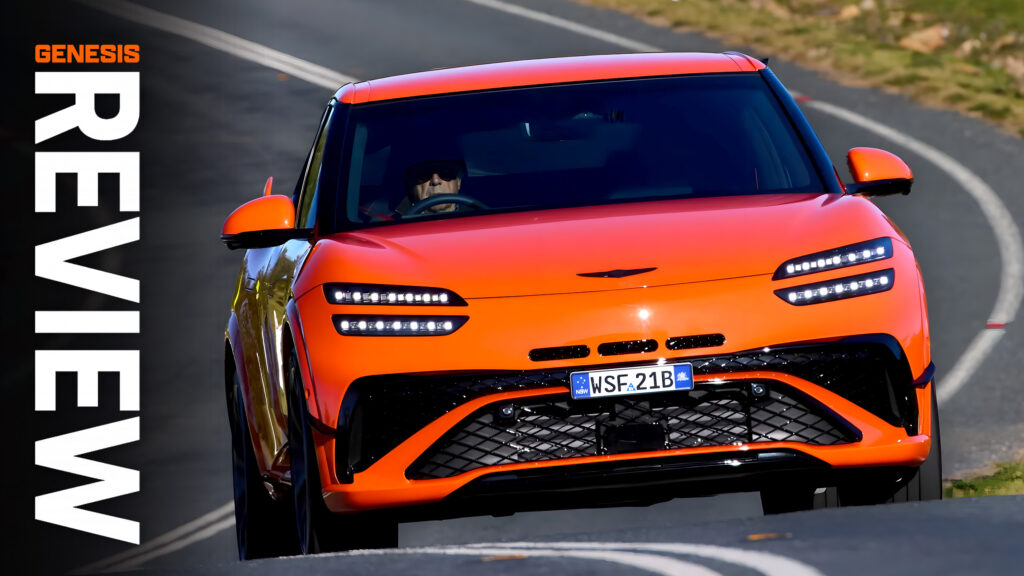




by Brad Anderson
CONS ›› Pricey, in-efficient, heavy QUICK FACTS

Photos Credits Hyundai Australia
Photos Hyundai Australia
Photos Hyundai Australia
Photos Hyundai Australia
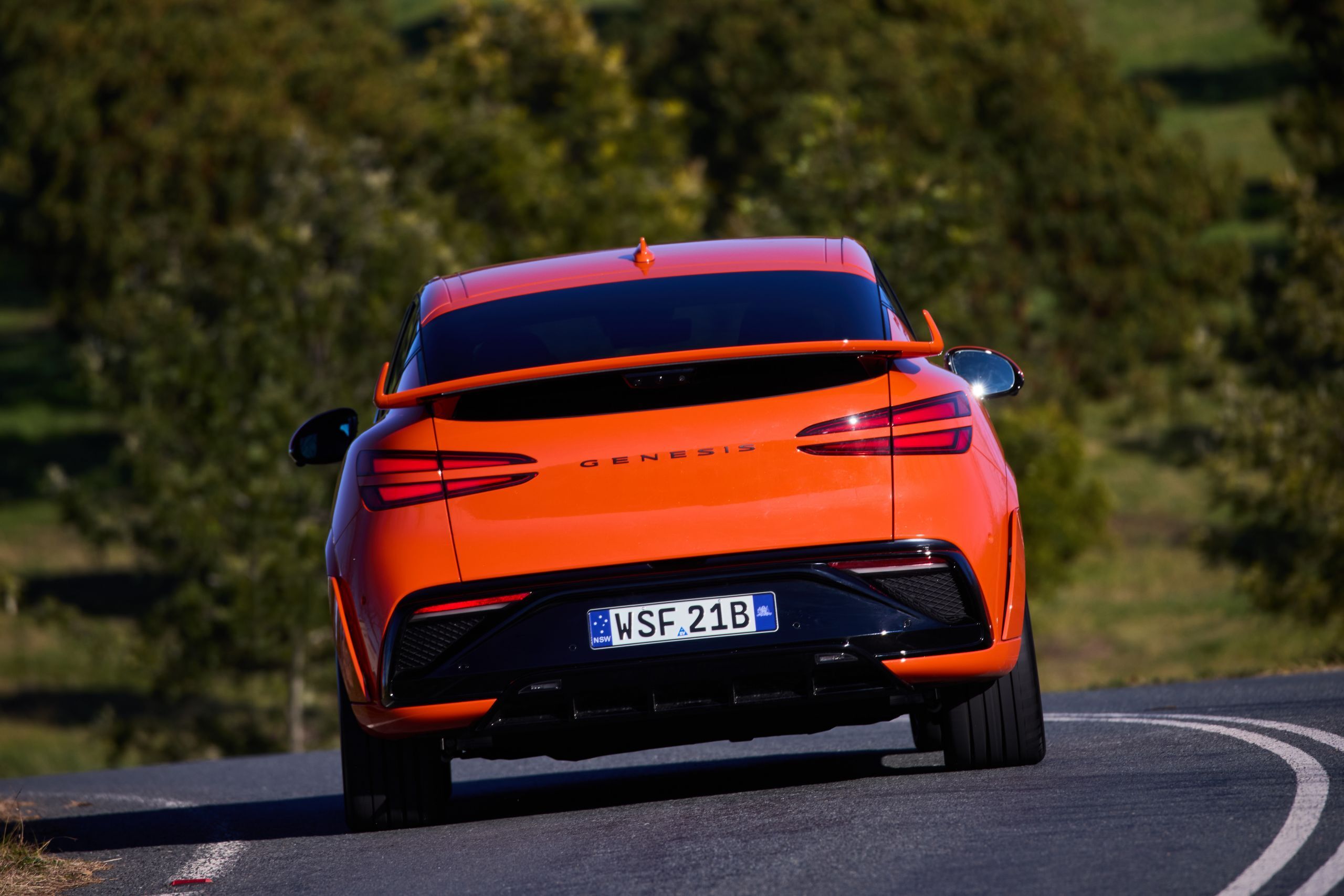
Photo Brad Anderson/Carscoops
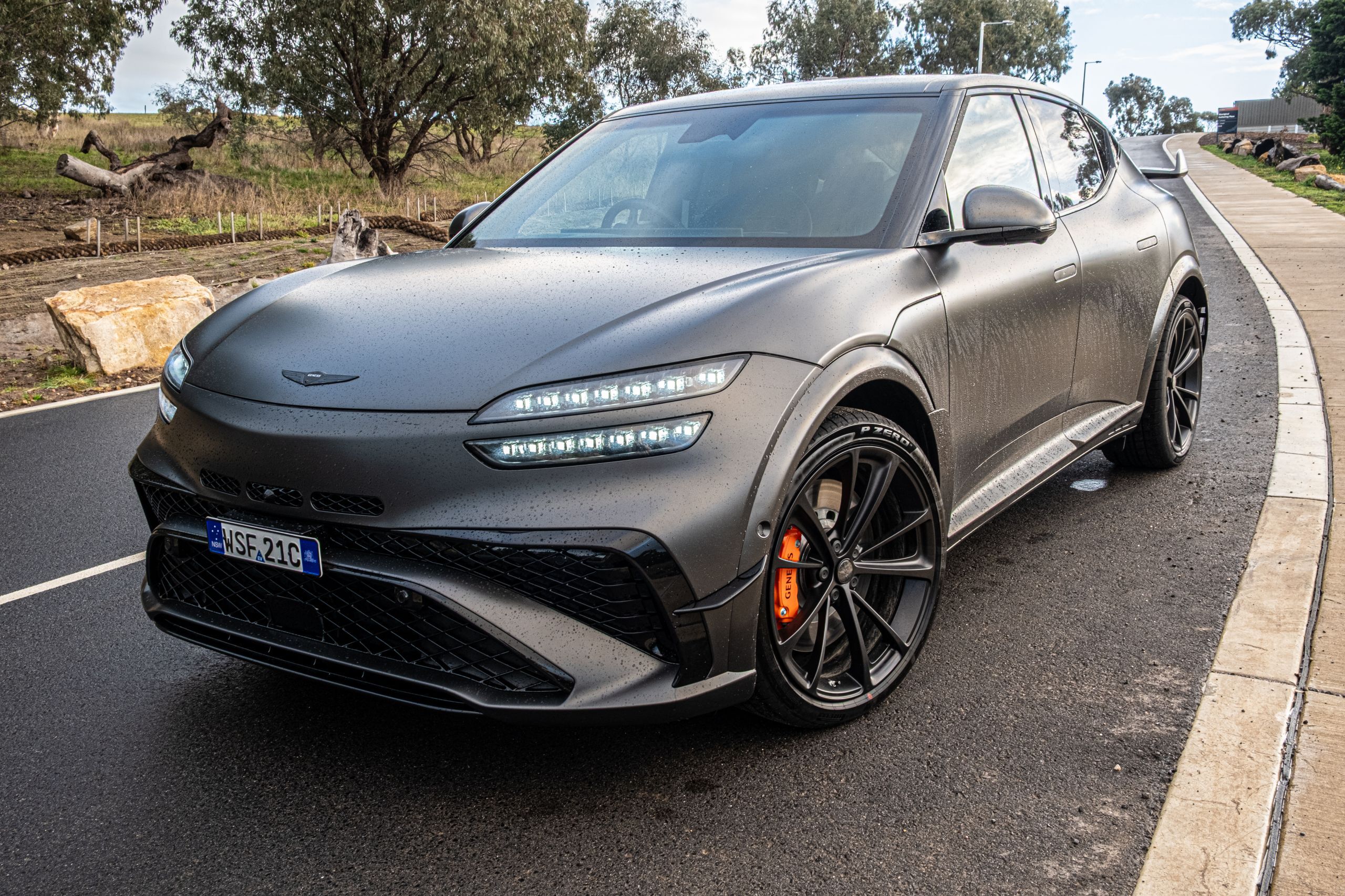
Photo Credits Brad Anderson/Carscoops
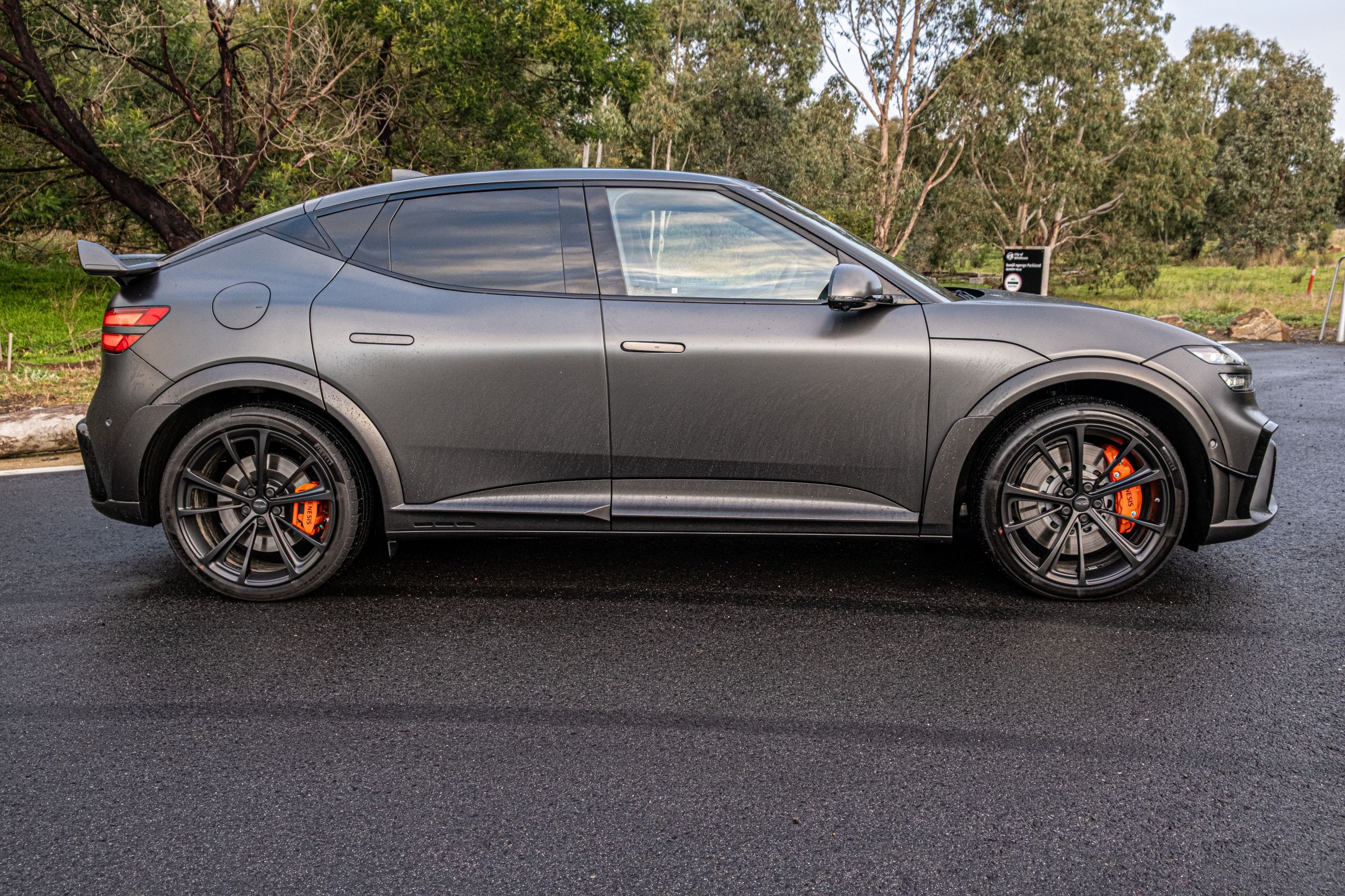
Photos Hyundai Australia
Photos Hyundai Australia/Brad Anderson for Carscoops
Genesis’s New GV60 Magma Keeps The N Car Madness Without The Boy-Racer Baggage | Review | Carscoops


14

