Autobayng News Team

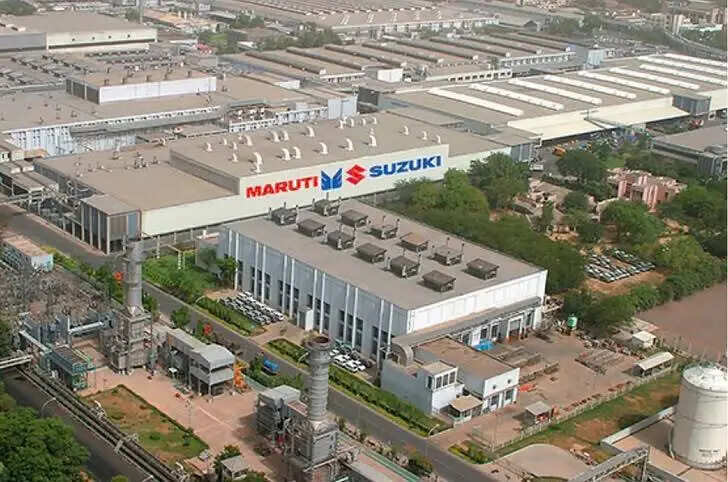 Maruti Suzuki Kharkhoda plant
“>
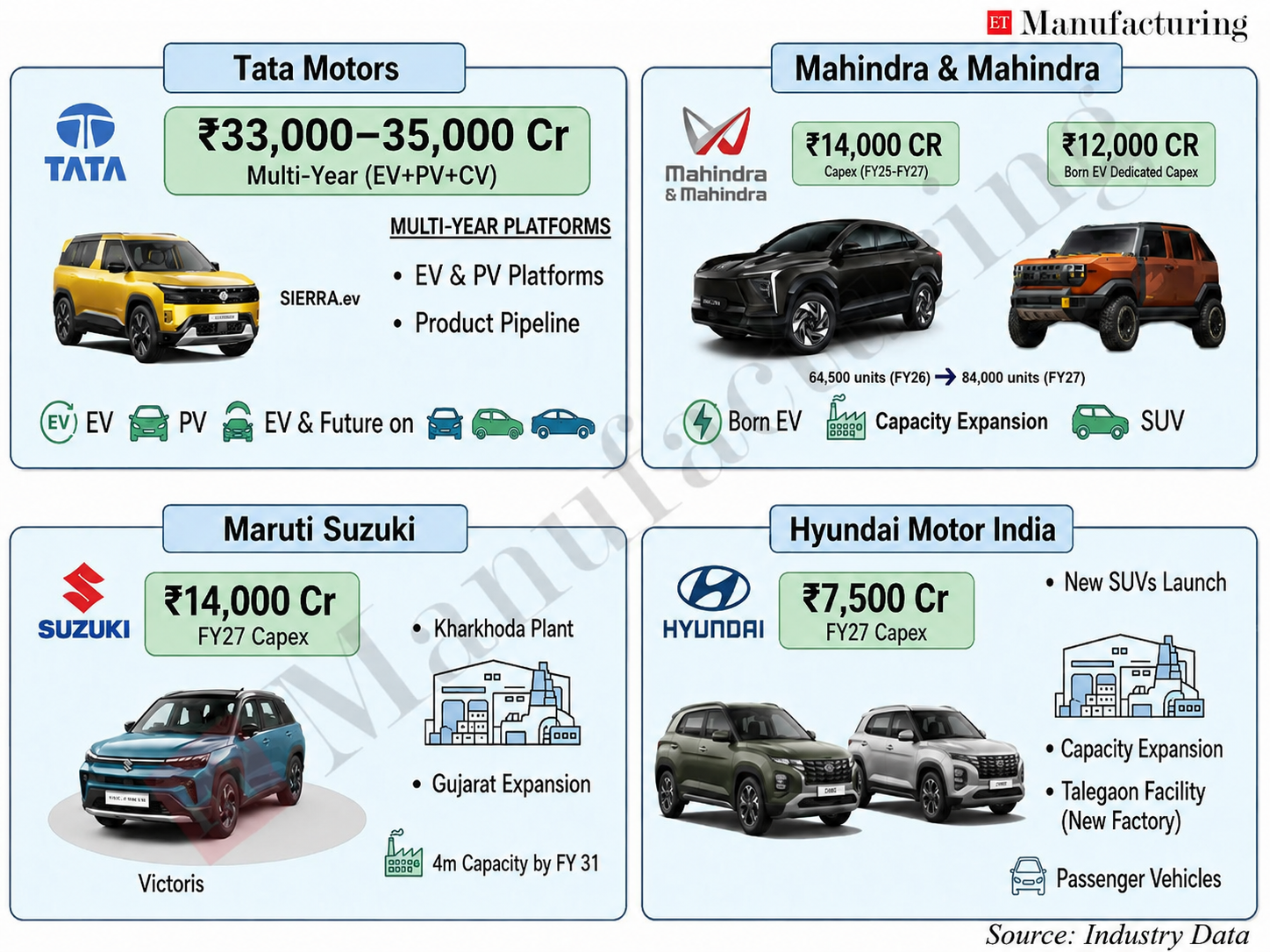
Nearly ₹50,000 crore– that’s the amount Indian automakers and major component suppliers together have committed for FY27 and beyond towards capacity expansion, new products, electrification and localisation.
This investment pipeline spans passenger vehicles, commercial vehicles, two-wheelers, EVs and critical component manufacturing. According to industry pundits, this signals a confidence by the industry in India’s long-term manufacturing and export potential despite rising input costs and geopolitical uncertainties.
“The current capex cycle is being driven by multiple factors,” said Ashim Sharma, Senior Partner and Business Unit Head – Automotive, Nomura Research Institute (NRI). “Several OEMs are nearing high capacity utilisation, while companies are simultaneously investing in new products, alternative powertrains and regulatory-driven technology upgrades. This naturally cascades down to component suppliers.”
Leading OEMs including Mahindra & Mahindra, Tata Motors, Maruti Suzuki, Hyundai Motor India, TVS Motor, Bajaj Auto and Ashok Leyland have announced sizable investments in manufacturing expansion and future product programmes.
Similarly, suppliers such as Samvardhana Motherson, Uno Minda, Bharat Forge, Amara Raja, Apollo Tyres and Bosch India are investing in localisation, advanced technologies and new manufacturing capacity.
According to Sharma, these announcements are backed by long-term planning rather than short-term market optimism.
“Historically, companies have largely followed through on announced capex plans. There may be delays of six months or a year depending on market conditions, but significant deviations have been rare,” he said.
EV ecosystem attracts fresh investments
A significant share of the investment pipeline is being channelled into India’s evolving EV ecosystem.
Besides vehicle development, companies are investing in battery cell manufacturing, battery management systems, thermal management, motors and power electronics. Recent fuel price increases have further strengthened the case for electrification, Sharma noted.
“Some fence-sitters may now move towards EVs as fuel prices rise. At the same time, almost every major manufacturer has EV products under development, requiring investments across the supply chain,” he said.
He added that investments linked to rare earth processing and magnet manufacturing are also expected to gain momentum as India strengthens domestic capabilities for EV components.
However, Sharma stressed that internal combustion engine (ICE) vehicles will continue to dominate investments.
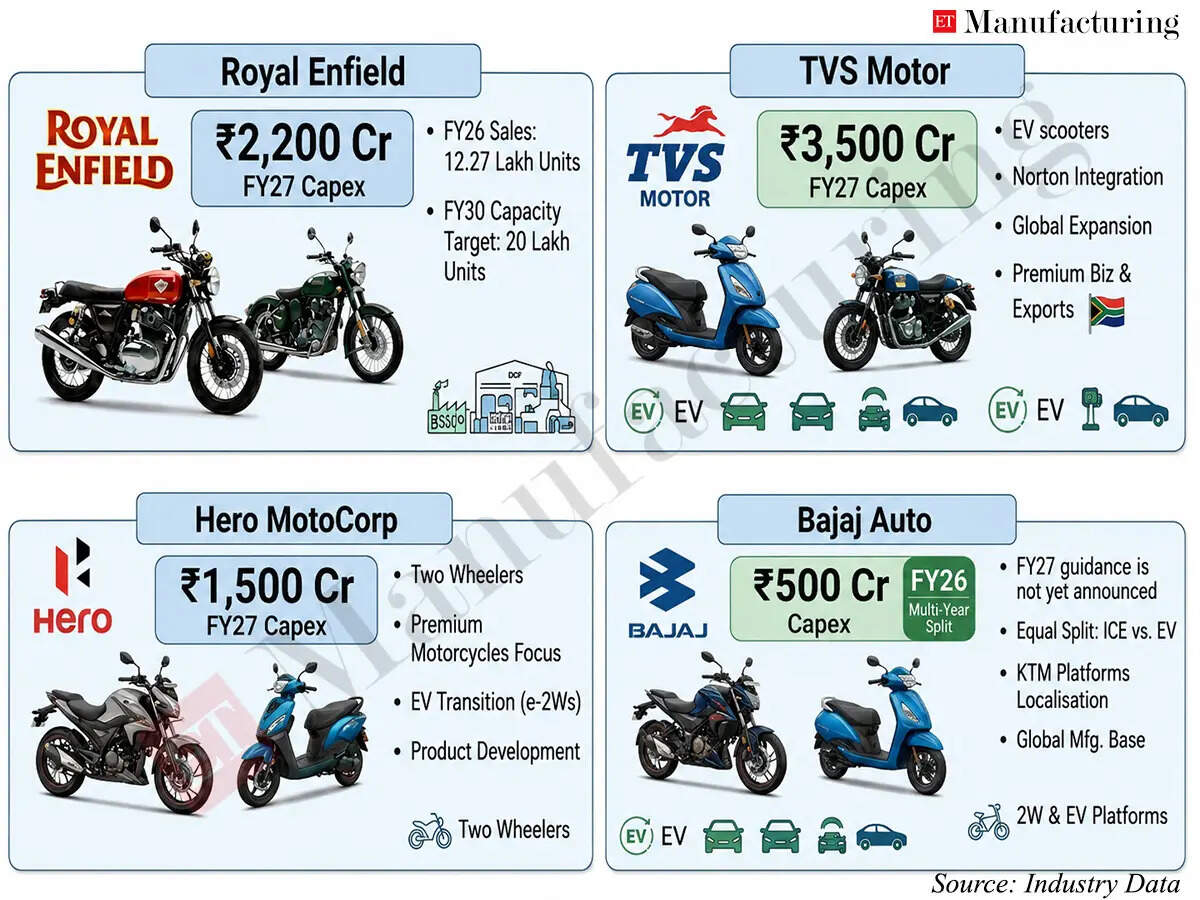
“A large part of the Indian market remains ICE-driven. While EV investments are accelerating, a significant share of the current capex is still directed towards ICE products and manufacturing,” he said.
Contrary to concerns over excess capacity, Sharma believes the industry is entering a healthy investment phase.
“I would describe this as a healthy capex cycle rather than an overcapacity cycle. Many OEMs are already operating at high utilisation levels, making expansion necessary. At the same time, investments are supporting newer technologies that have long-term growth potential,” he said.
Government support through Production Linked Incentive (PLI) schemes, advanced cell manufacturing incentives and favourable EV policies has also encouraged manufacturers to accelerate investments.
India strengthens its manufacturing base
Beyond domestic demand, companies are also positioning India as a global manufacturing and engineering hub.In recent years, India has become competitive not only in manufacturing but also in product development.
“Investments in Global Capability Centres, engineering services and R&D are strengthening India’s position as a low-cost development hub,” Sharma said.
India’s continuing strength in ICE vehicle production also presents export opportunities.
Sharma is of the view that many global markets will continue to use ICE vehicles for years.
And, India’s manufacturing scale can support competitive exports of both vehicles and components.
Further, Free Trade Agreements (FTAs) are expected to further support exports, although evolving global regulations such as carbon border adjustment mechanisms could encourage investments in greener manufacturing technologies.
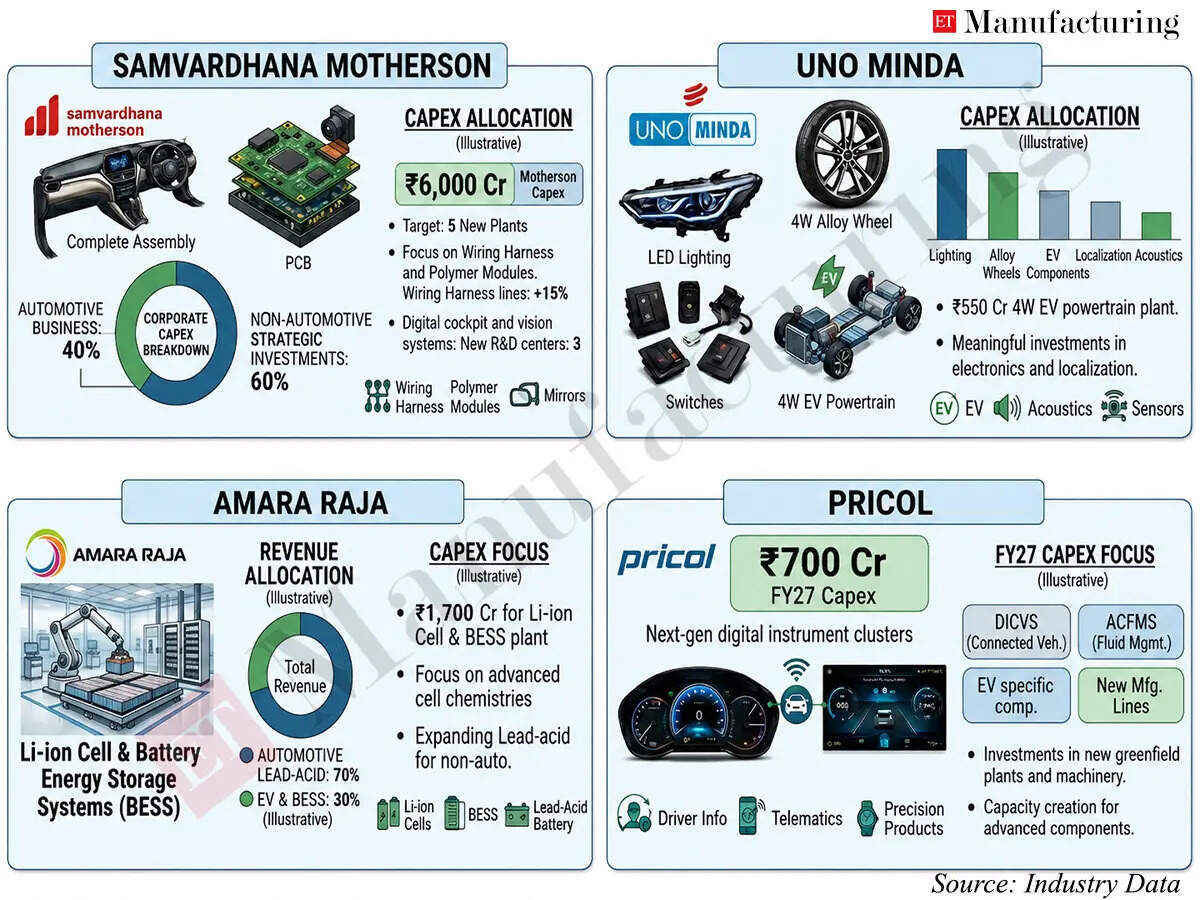
Component suppliers are also expected to keep pace with OEM expansion plans, reflecting the industry’s integrated manufacturing ecosystem.
“The automotive industry today functions through close collaboration between OEMs and suppliers. Their investment plans are generally aligned with vehicle launches, production schedules and technology roadmaps,” Sharma said.
Many suppliers also cater to multiple vehicle manufacturers, enabling them to diversify investments while supporting industry-wide capacity growth.
Short-term headwinds unlikely to alter plans
The industry continues to face challenges from higher commodity prices, freight costs, insurance inflation and geopolitical uncertainty. However, Sharma believes these are unlikely to derail long-term investment plans.
“These investments are being made with a long-term horizon rather than for the next six months. Companies may adjust project timelines slightly, but I do not expect them to fundamentally alter their capex plans because of short-term headwinds,” Sharma said.
Join the community of 2M+ industry professionals.
Subscribe to Newsletter to get latest insights & analysis in your inbox.
All about ETAuto industry right on your smartphone!
- Download the ETAuto App and get the Realtime updates and Save your favourite articles.