Autobayng News Team


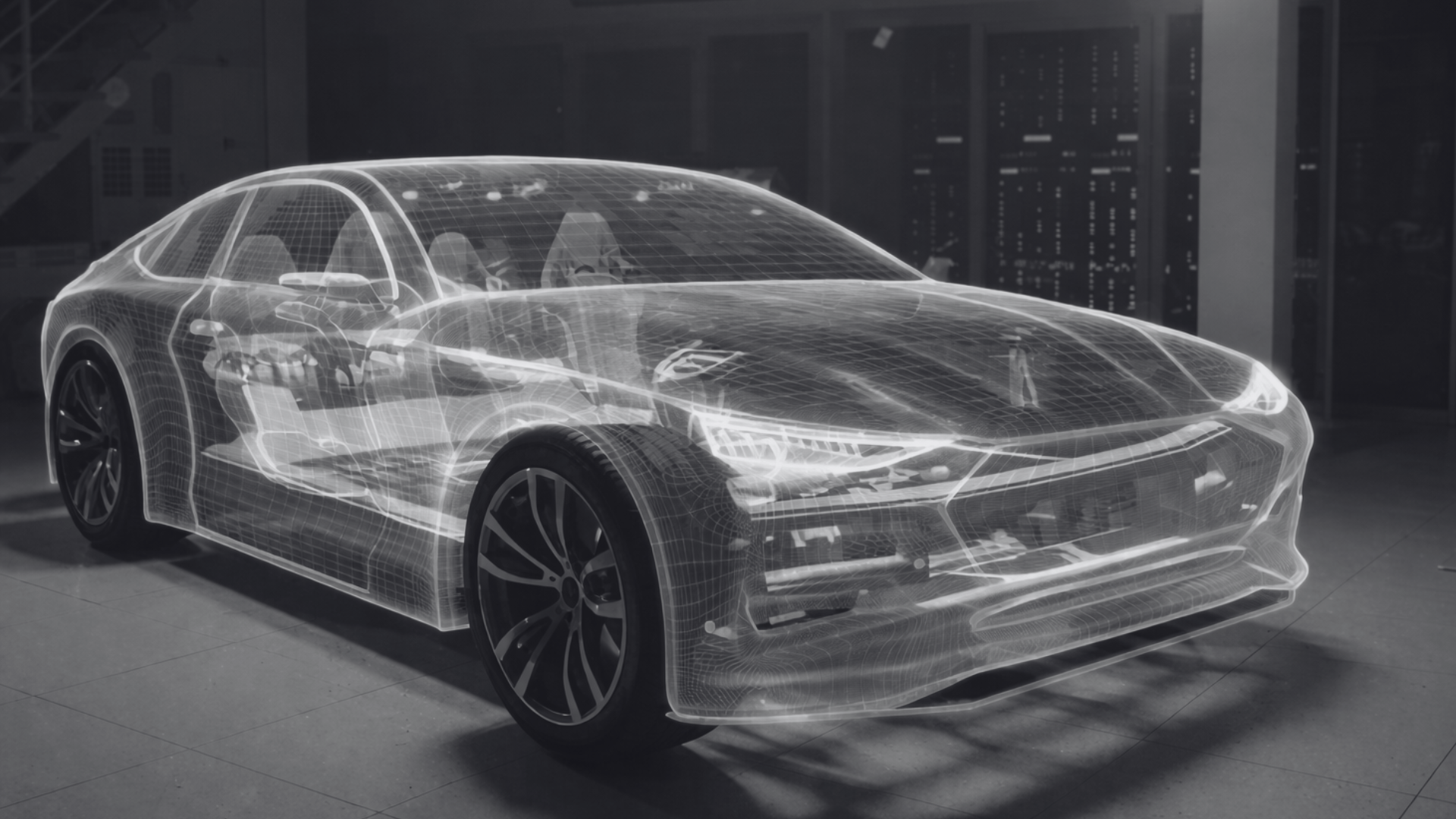 Local teams in India are now involved in major software development processes, safety systems and the underlying architecture for electric and connected vehicles.
“>
Building a car is not a single act of engineering. It is a long sequence of decisions, often stretching over years, spanning materials, software, safety, performance and aesthetics, each shaped by the requirements of different markets.For some of the world’s largest automakers, the tolerance for error in that process becomes near to zero. That has led them to reconsider where critical engineering work is done, and where capability can be scaled without compromising standards.It is within that context that global capability centres (GCCs) in India have expanded their role. Set up over the past two decades as support units, these centres might not have initially intended to lead product development or core engineering. However, the centres have grown, with their mandates taken more prominence in this process.India is home to over 60 automotive GCCs, employing over 110,000 engineers and generating upwards of $3 billion in revenue, showed a PwC report.
Local teams in India are now involved in major software development processes, safety systems and the underlying architecture for electric and connected vehicles.
“Mobility safety is increasingly being defined by software, with AI and real-time data enabling vehicles to take on a more proactive role. With digital twin technology, we’re also able to start predicting what accident-prone scenarios might look like,” Manu Saale, Managing Director and CEO, Mercedes-Benz Research and Development India (MBRDI) told ETGCCWorld.
AI, digital twins on the stack
Vehicles are no longer built as purely mechanical systems. Software and data now sit closer to this process, and GCCs are making their mark in that transition.
Initially set up to handle support tasks, they now take on parts of product development, with teams working across engineering R&D, embedded systems, digital platforms and data.
This also spans across functions such as advanced driver assistance systems (ADAS) and battery management systems to infotainment, telematics and digital manufacturing platforms.
MBRDI is Mercedes-Benz’s largest R&D centre outside Germany, housing over 8,500 people. Through MO360, a digital twin technology solution, the firm is able to create digital replicas of its factories, from assembly lines to shop-floor operations.
These models are used to plan and test production in advance, helping cut costs, improve quality and reduce the time needed to start manufacturing new models.
Notably, the majority of their work is moving closer to how vehicles behave on the road. MBRDI’s accident research teams are using machine learning models and sensor data to study patterns that precede crashes.
“In the automotive world, this is the time for reinvention. We’re advancing capabilities, but fundamentally we’re transforming how we innovate and we’re doing it with agility. Constraints will be there, of course, they are the fuel for creativity,” Saale added.
The center evaluates factors such as braking, steering and road conditions, which are analysed in real time to flag potential risk, allowing for early warnings for accident prone scenarios.
For French multinational firm Dassault Systèmes, its India centers sit at the center to build software solutions for 3D modeling, simulation, and information intelligence through its 3DEXPERIENCE platform.
This is done by creating virtual worlds, also known as digital twins, which are scientifically accurate digital representations of real-world products and systems.
“We have both the software development lab and the implementation services center, and the kind of innovation that happens in each is quite different,” said Manish Tambe, VP – Global Cloud Transition, Dassault Systèmes Global Services (DSGS).
This solution helps businesses explore scenarios, predict future behavior, and develop sustainable solutions without risk or waste.
At present, their platform is used to assist in the process of developing vehicles, including EVs, by companies such as Renault and JSW Motors.
“In our software development lab, we are developing the products for the future, having a long-term vision and strategic clarity coming from HQ for 2040. We are innovating for our customers, helping them extract incremental value from our solutions in their own context,” Tambe added.
The engineering horsepower
A key driver of this evolution is India’s engineering talent base. The country produces a large pool of engineers annually and offers a combination of cost efficiency and technical capability that few regions can match.
“India is uniquely positioned to thrive in frugal environments, where engineers work with limitations and deliver meaningful impact. India’s engineering R&D centres are proving that with the right mix of local ingenuity, bold bets, and strategic collaborations, we can not only meet but exceed global expectations,” Saale said.
This ability to deliver under constraints has translated into a competitive USP for the region, especially as automakers look to fasten development cycles and reduce time-to-market.
Today, GCCs are also increasingly being trusted with high-value work. Global companies across sectors–even aerospace and semiconductor firms–are shifting critical R&D mandates to cities such as Bengaluru, Pune and Hyderabad.
For several automakers, the centers are acting as core contributors to global product roadmaps.
“Every revolution begins with a vision. For Stellantis India, that vision is to engineer the future of mobility from India for the world,” said Shailesh Hazela, CEO and Managing Director, Stellantis India.
The automobile GCC workforce in India could grow from around 110,000 currently to nearly 300,000 by 2030, with revenue potentially tripling to $9 billion, added the PwC report.
This growth is being driven by increased trust from global headquarters, rising demand for continuous engineering support, and adoption of collaborative technologies such as digital twins and virtual engineering.
“In Bengaluru, over 1,000 engineers work on global programs spanning AI-driven personalisation and acoustic engineering that enhance the in-vehicle experience. These innovations are shaping the future of software-defined vehicles, positioning India at the heart of Stellantis’ global technology roadmap,” Hazel added.
The road ahead
Several industry leaders believe that to sustain growth and deepen their role, automotive GCCs in India will need to move decisively on multiple fronts.
This includes building capabilities in next-generation technologies such as ADAS, autonomous systems, and software-first vehicles, while strengthening collaboration with headquarters, academia, and the startup sector.
“There was a time when a drawing would come from somewhere in the globe and the question was, can you do build-to-print in India? That has changed to who can supply us a build-to-spec part from India,” said Rohit Gupta, Regional Director-R&D at the Nexteer Automotive India Technical Center.
In simpler terms, build-to-spec here means designing and manufacturing a component based on performance requirements, rather than strictly following a detailed drawing.
This shift has been majorly enabled by a deeper supplier base, policy support, and domestic demand growth across passenger vehicles, commercial vehicles, and farm equipment, noted Gupta.
“Teams here follow the process to the teeth…from engineering design, simulations, building digital twins, and anticipating scenarios that may happen one in a million,” Gupta explained.
Equally important is the transition from execution to measuring value, with greater focus on outcomes such as IP creation, patents and impact on products and customers.
As the sector moves further toward software-led development, centres that combine engineering depth with digital capability are likely to take on a larger role.
And as the car itself becomes more software than steel, the centres best placed to matter are not necessarily the largest ones. As are the ones that have quietly moved from being told what to build, to deciding what comes next.
Join the community of 2M+ industry professionals.
Subscribe to Newsletter to get latest insights & analysis in your inbox.
All about ETAuto industry right on your smartphone!
- Download the ETAuto App and get the Realtime updates and Save your favourite articles.