Autobayng News Team

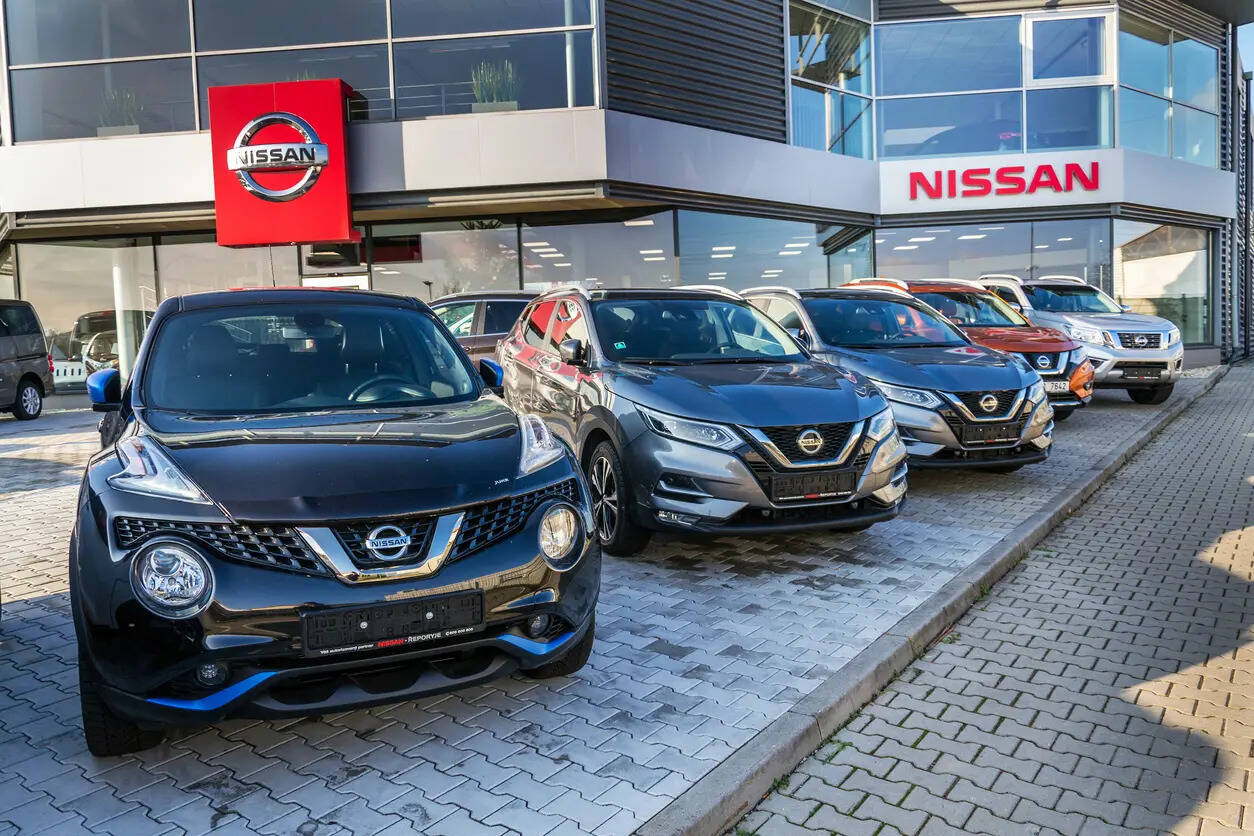 Nissan says global automotive partnerships are becoming essential as stricter regulations, localisation demands and market disruptions reshape the industry.
“>
Ask Thierry Sabbagh about the growing trend of partnerships in the automotive industry, and pat comes the reply.
“The automotive industry is moving from global to local because of regulations, while partnerships are moving from being local to global for survival,” Nissan Motor’s Divisional Vice President and President, Middle East, KSA, CIS and India told ET Auto.
China is increasingly emerging as the highest common factor in alliances with European carmakers, which are keen to leverage its auto industry’s cost-competitive structure. Renault, for instance, has a partnership with Geely for Brazil and South Korea, while Stellantis hopes to make the most of its alliance with Leapmotor and Dongfeng.
Nissan, likewise, has been vocal about the need to join hands with another global player, perhaps a Chinese automaker, given today’s trends, given the way the automotive world is hurtling from one challenge to another. The company was in talks with Honda about a merger, which was eventually called off, but it is still keeping its options open.
“I think the way the world is shifting to deliver on localisation means that you will see more and more OEMs collaborating. Whether it is a Chinese with an American or an American with a Japanese, I will not be surprised if you get to see more on this,” said Sabbagh.
Building the Dongfeng alliance
In the process, there will be a “change of scenery” within the automotive industry and partnerships emerging as a key element of this makeover. From Nissan’s perspective, it already has a relationship with Dongfeng and is building “some great models” that will include exports.
For example, the Middle East will be importing China-sourced vehicles for the first time, and that “tells you that these partnerships are now starting to go beyond just the local situation”.
Yet, it is not as if everything is hunky-dory in the Chinese automotive landscape, which is facing a problem of plenty with over 130 brands. Whether all will survive in the midterm is a million-dollar question, and, in all likelihood, there will be a lot of consolidation happening in the near term.
Right now, Chinese automakers are literally going for the jugular, as evidenced by their rapid growth across Europe, Latin America, and the ASEAN region. Their aggression has been especially on display in markets like the UAE, where 44 Chinese auto brands have debuted in less than 12 months.
For companies like Nissan, this is the time to reshape themselves to a size that gives them focus, agility, flexibility, and speed. “This is what we are now really experiencing internally in terms of agility and speed of decisions. This is helping us to keep pushing in the right direction,” explained Sabbagh.
In India, we definitely need Renault and they need us. The foundation of this relationship is based on mutual respect, individual interest and collaboration for the betterment of the two brandsThierry Sabbagh
Driving efficiency and speed
Partnerships have been identified as one of Nissan’s key pillars for driving efficiency and speed. Eventually, the goal is to be successful and build a long-term strategy defined by the product lineup, digital initiatives, exports, etc.
“For partnerships to work well, both parties need each other but solely for the right reasons. In India, we definitely need Renault and they need us. The foundation of this relationship is based on mutual respect, individual interest and collaboration for the betterment of the two brands,” said Sabbagh.
Saurabh Vatsa, Managing Director, Nissan Motor India, said that, within auto OEMs today, nobody is trying to invent their own process technology, which has led to a new perspective on partnerships.
“They are now looking at who is faster, better and efficient in the areas where they can collaborate,” he added. Nissan, for instance, launched an exchange programme with an ally where a car could be swapped in just 55 minutes.
The company had two options: either go out there solo and develop this downstream and upstream tech capability, or sign up with a partner to access a whole lot of cities. Neither the dealer nor Nissan needed to worry about the paperwork.
Significant breakthrough
Likewise, continued Vatsa, Nissan’s AI consultant, Akira, has been a significant breakthrough. “She will tell you everything about the Gravite in Hindi and English and is getting ready to speak in six languages,” he said. Today, Akira has almost 10,000 dialogues, with a daily learning rate of 600 to 800.
There will be a “lot more stuff” going into the Tekton, which is scheduled to be launched on July 9. “We have planned our launches in such a way that we keep telling ourselves, we have got miles to go before we sleep. We are kind of looking at the business in such a way that we keep it small, engaging and exciting for everybody,” said Vatsa.
We went from localisation to globalisation but then started to see that the US was having certain mandates while China and Europe were moving into another on regulations and emissionsThierry Sabbagh
According to Sabbagh, it has been “quite interesting” to see how the automotive industry has been completely disrupted in today’s times. “We went from localisation to globalisation but then started to see that the US was having certain mandates while China and Europe were moving into another (mandate) on regulations and emissions,” he elaborated.
Electric vehicles, which were the flavour of the season until recently, are now “really going down”, putting a lot of pressure on manufacturers. After all, it takes time and money to change strategies, and this is not “a simple task”.
“I think what is clear is, and this is what Nissan is really trying to do, is to stay true to its DNA and draft a vision that can cater to that. But it is also important to understand where and how you can win. The times where you want to do everything and everywhere do not work anymore,” cautioned Sabbagh.
Balancing out diverse markets
While some countries require a strong presence, there are also emerging markets where “you have to find how you want to play”. This is the new template for Nissan, where the US, China and Japan, along with India and Latin America, have a key role to play, which in turn ensures a far more focused approach.
“Today, it is not just about how many cars or models you sell but making sure that you deliver customers a choice and make an impact on the segments concerned. When I meet our partners and they want to have this and that, I tell them it is not that simple because the whole chain has to work eventually,” said Sabbagh.
COVID taught us to be resilient and the world will never be linear. It will always go up and down but we have to keep operating in the same way we do and stay focusedThierry Sabbagh
While conceding that there would be challenges galore in today’s volatile world, he pointed out that this had been the case for some years now, with the pandemic followed by the chip shortage and now the West Asia conflict.
“COVID taught us to be resilient and the world will never be linear. It will always go up and down but we have to keep operating in the same way we do and stay focused,” said Sabbagh.
Coping with the West Asia crisis
He recalled the time when the bombings in Iran began on February 28, and there was a logistics crisis to handle. “We found a way and since we have built relationships, we knew how to approach the challenge. We have learnt from previous storms and were able to work with our partners and suppliers to manage the crisis,” he continued.
The key is to adopt a flexible mindset and adjust plans as needed.
“How can we predict the future? The times where you were sitting here and building your midterm plan for the next three years are long gone. I always tell my team that we cannot spend 80 per cent of our time planning but confine this to just 20-30 per cent with 70 per cent spent on executing while making sure that it is flawless,” said Sabbagh.
Join the community of 2M+ industry professionals.
Subscribe to Newsletter to get latest insights & analysis in your inbox.
All about ETAuto industry right on your smartphone!
- Download the ETAuto App and get the Realtime updates and Save your favourite articles.