

 Autobayng News Team

From Senegal to Somalia and Egypt to South Africa, credit alert notifications from fintech apps such as Western Union or WorldRemit often set the mood for the rest of the day, week or even month.
Transfers from workers within the continent and the diaspora to their relatives are often referred to as the “black tax”, whereby one person’s salary and relative success can become the safety net for a whole extended family.
For those sending money, the payments are both a burden and badge of pride. In Nigeria’s economic engine, Lagos, salaried workers surveyed last year said that an average of 20% of their monthly wages went to supporting relatives.


In South Africa, where unemployment is above 42%, one wage supports almost four people, according to Pietermaritzburg Economic Justice & Dignity Group, a research and campaign organisation. Research in Kenya found that the pressure to give money to family members made entrepreneurs limit the growth of their businesses.
Remittances from Africans outside the continent have also been sustaining homes and dreams, paying for everything from rent to healthcare and school fees. They totalled $100bn (£74bn) in 2022, more than aid or foreign investment, according to the African Development Bank.
Many well-educated young professionals aim for high-paying careers so they can also build wealth for the next generations, who they hope will avoid the struggles they went through when growing up.
The Guardian spoke to people on the continent and in the diaspora about the privileges and pressures of supporting family members while also hoping to provide future generations with financial stability.
Kenya
Anthony Kimere, a Kenyan, relocated to Europe 36 years ago, studying then working in Italy before moving to Germany, Denmark and now the UK, where he drives Transport for London buses.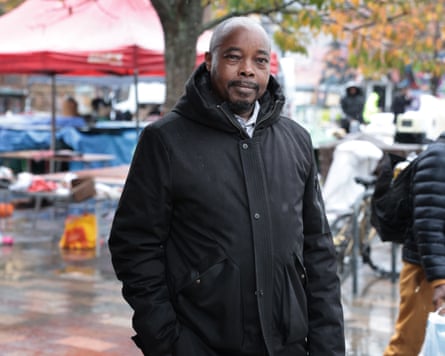
Over that time, he’s supported his extended family back home in various ways, including sending upkeep to his grandparents, paying school fees for his cousin, and contributing to the payment of medical bills for many other relatives.
While he mostly gets direct requests for support, he had a “subconscious feeling” to help out of obligation or a sense of responsibility because, having grown up in Kenya, he went through some of the challenges his kin are experiencing and therefore understood and related with the difficulties, he said.
“You feel obligated to give back because you know the situation,” said the 55-year-old, who grew up in the town of Timau, in central Kenya. “You know your background, you know the people you have left behind, so you are quite aware of the challenges they go through.”
He added: “I understand we people don’t have the same luck.”
Kimere, who has a large extended family, acknowledged that sometimes the assistance took a toll on his personal finances.
“The more people there are, the more frequent problems might be,” he said.
Zimbabwe
Fungai Mangwanya experienced hyperinflation and economic collapse while growing up in Zimbabwe. Seeing his grandmother struggle to make ends meet as she raised him was a huge motivation to pick a high-earning career.
The data analyst, who is 35, moved to the UK in 2022 with his wife so they could support those who had raised them and build wealth for future generations.
“As you’re getting into adolescence, you begin to see what’s going on with the economy … and you see how tough some areas are. So you begin to try and try and try and put yourself in that narrow band of people that have better opportunities,” he said.
“My grandmother worked over 40 years in education, but then because of the volatility of our economy everything that she worked for kind of came crashing down. She was getting a pension that was hardly enough to pay her water bill, but at the same time, she still needed to survive.”
While Mangwanya’s grandmother and his wife’s uncle – who raised her – died last year, he still supports his aunt, his brother and a cousin who is in university. He and his wife also want to build wealth for the children they hope to have.
“For me, it’s just to be able to say that my child can go to whatever school they want across the world, or they can venture into whatever career, and they can still make their mistakes and restart without the worry of: where is my next meal going to come from?”
South Africa
Mpho Hlefana reached her goal of running a marketing department before she turned 40, several years before her target. But she still worries about losing everything.
“I think about it all the time, so I feel like I need to overcompensate as much as possible earlier on, [which] decreases the potential risk,” said Hlefana, who is 37.
Hlefana grew up initially in Soshanguve, formerly a black-only township north of Pretoria. Her father worked in HR and her mother was a teacher, and both instilled in her the value of education, discipline and hard work. The family then moved to the more affluent Pretoria suburb of Queenswood, to be closer to good schools.
Hlefana loved dancing, but decided to study marketing at the University of Pretoria: “I didn’t come from a lot of money. I watched my parents cobble together money to get us into really good schools so we could get a great educational background.”
While the end of white minority apartheid rule in 1994 opened up many previously inaccessible education and employment opportunities for black South Africans, South Africa remains deeply unequal along racial lines. In 2023, the average white household income was almost five times as high as the average black household, according to official data.
After university, Hlefana moved to Johannesburg: “Johannesburg has always been painted as the city of lights and the city of opportunity … If you wanted to make the most money in South Africa you had to move to Johannesburg.”
Hlefana, who is going through a separation from the father of her children, said she wanted to keep building wealth so she could provide her daughters, who are four and six, with their first homes and cars: “They should essentially, similar to what my parents said to me, do better than I have.”
West Africa
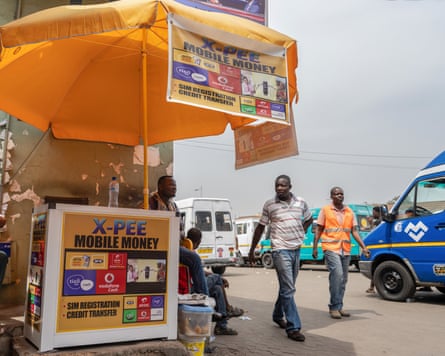
Some European countries already tax remittances, and this month a 1% remittance tax came into force in the US.
For Eguono Lucia Edafioka, a Nigerian doctoral student in history at Vanderbilt University in Nashville, remittances will go on regardless.
“The way I see it, for most people who send money home, the money is usually for needs, not wants or luxuries,” she said. “When the money you send is for food and medicine, and just things to ensure the survival of family members, especially aged parents, you don’t really have a choice.”
Experts warn that a small tax on outbound transfers from diaspora hubs such as the US could disproportionately affect lower-income migrants, who already face high transaction fees.
Speaking before the new US tax came into force, Abednego Kwame, a 32-year-old Ghanaian management consultant living in Linden, New Jersey, said he was already bracing for what was coming. Since relocating from Accra a few years ago, he has been a primary source of support to his parents and younger sister. There have also been intermittent requests from a few other relatives and some friends dealing with soaring costs of living back home.
“I budget, and when somebody asks me for money and it’s within my budget, I just send it,” he said.
Like Edafioka, he doesn’t expect the new tax to put a strain on relationships with relatives back home. “My dad’s content with whatever I send,” he says. “If I send him $90 instead of $100, he’s not going to complain.”
