Autobayng News Team

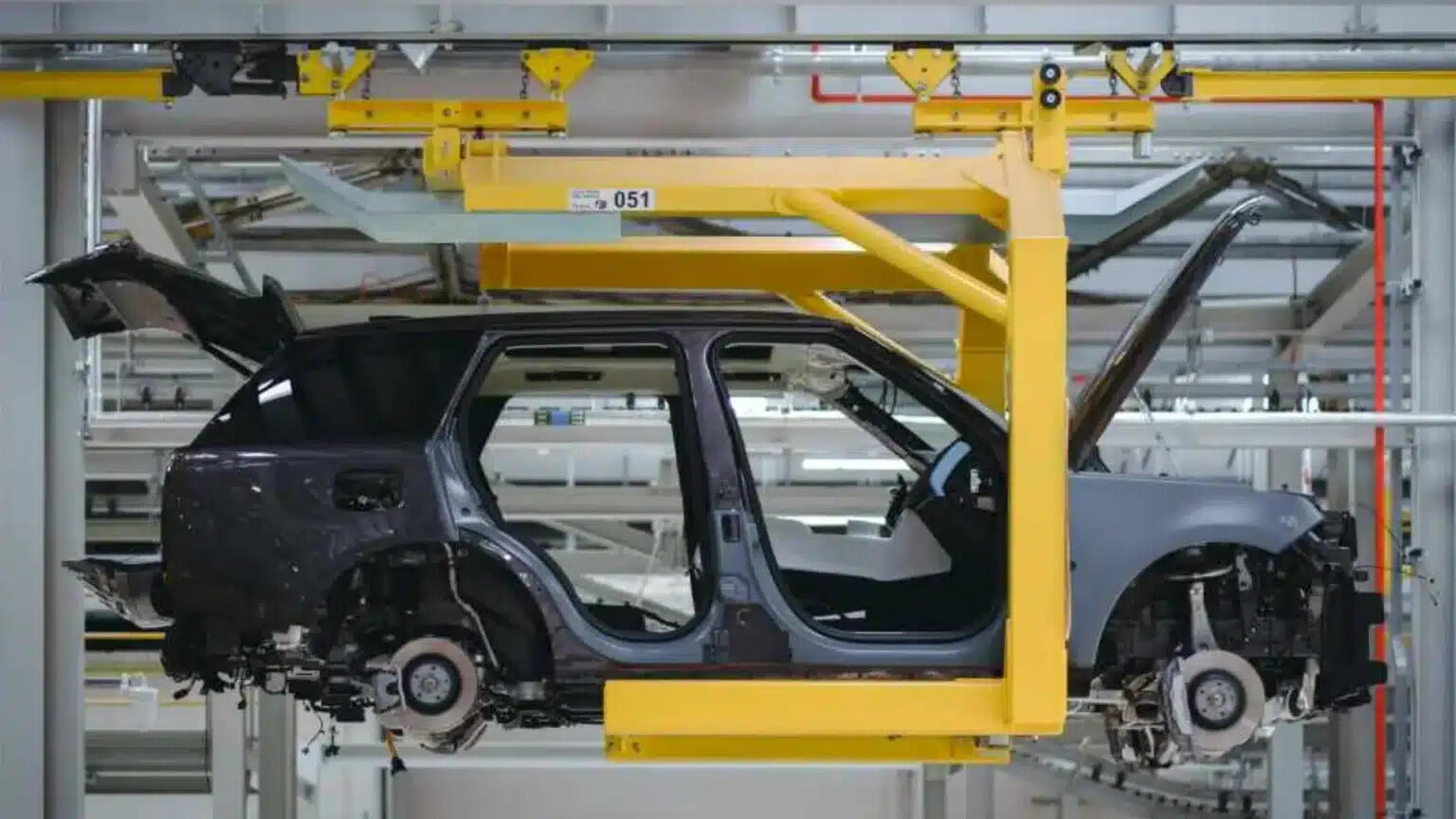 JLR is also strengthening procurement by elevating it to the board level and enhancing collaboration with Tata Motors in areas like electrification, software-defined vehicles, and autonomous technologies.
“>
Badly dented by a cyberattack last year that forced a five-week shutdown and a quarterly loss of £485 million in the September quarter, Jaguar Land Rover is seeking to reverse its fortunes and restore its position as the engine driving Tata group’s automotive business.JLR is tightening accountability across its “house of brands” strategy by making each of them financially responsible for performance, and elevating procurement to the board level, said new chief executive PB Balaji, signalling continuity in strategy while pushing for faster execution.Despite operational vulnerabilities exposed by the cyberattack, there will be no strategic reset.“The strategy is already there. What we are doing is doubling down on it and executing faster,” he said in an interview. “We are not running this business quarter by quarter. If you do that in this kind of market condition, you’re toast. You have to take tough calls… I am a medium, long-term player. I don’t play for the quarter.” Currently, performance of all Jaguar Land Rover brands is evaluated at the corporate level.
‘Clear P/L Accountability’
Balaji, who took charge as CEO in November 2025, told ET in his first exclusive interview that Range Rover, Defender, Discovery and Jaguar will operate with clearer profit-and-loss accountability, effectively functioning as distinct businesses within the company.“Range Rover can be a business in its own right. Defender can be a business in its own right,” Balaji said. “That empowerment gives them speed and full accountability.” Both are brands under the Land Rover umbrella.The former Unilever executive, who earlier served as chief financial officer at Tata Motors, took charge as the luxury carmaker was grappling with the after-effects of the debilitating cyberattack that began late August 2025 and a time when the global automotive industry faces policy shifts on electrification, tariffs and supply-chain disruptions.
Balaji will also be leading Jaguar through its crucial evolution into an all-electric future. The company, emblematic of British motoring, stopped all production September 2025 pending its EV debut that’s expected later this year.
Tata Motors reported a consolidated loss of ₹3,486 crore in the December quarter compared with a net profit of ₹5,485 crore in the same period a year ago while revenue fell 26 per cent to ₹70,110 crore, dragged down by JLR’s cyberattack woes. The cumulative production loss was 50,000 units.
JLR’s revenue declined 39 per cent to £4.5 billion, while ebitda dropped 97 per cent to £33 million. Tata Motors’ free cash flow at the end of the quarter stood at negative ₹17,900 crore, while consolidated net debt rose to ₹39,400 crore. The company’s full-year ebit guidance for JLR remains at 0-2 per cent.
JLR’s dispatches to dealers fell to 59,200 units, down 43.3 per cent from a year earlier, primarily due to production stoppages caused by the cyber incident.
Tata Motors acquired Jaguar Land Rover from Ford Motor Co in June 2008 for $2.3 billion during the global financial crisis, one of Ratan Tata’s overseas purchase bets that paid off big time and has proved to be strategically significant despite periodic setbacks.
JLR emerged as a key profit engine for the group, driving sales growth, brand revival and technology synergies, including in electric vehicles. The luxury arm now contributes about 75-80 per cent of Tata Motors’ passenger vehicle revenues. The Gaydon, UK-based firm produces premium vehicles under the Jaguar marque alongside Land Rover’s Range Rover, Defender and Discovery families.
Balaji said speed matters but sometimes it is wiser to pause, let things settle, strengthen the team and then accelerate in the right direction. What matters is doing things correctly, he said.
“I’m patient about results but impatient about action, even when it means fixing unseen internal systems,” he said. “We’re not managing quarter to quarter; we absorb shocks, make tough calls and keep moving forward.”
To support the strategy, JLR has elevated procurement to a board-level role, aimed at bringing greater focus to sourcing and supply chains as localisation pressures and geopolitical shifts complicate global manufacturing networks. The company has also created a joint strategy function across Jaguar Land Rover and Tata Motors to explore opportunities in software-defined vehicles, electrification and autonomous technologies. Balaji said these are areas where collaboration could make sense even as the brands themselves remain differentiated.
“In a world of software-defined vehicles and electrification, the technology conversations can happen together,” he said.
A key element of JLR’s product push will be the return of Jaguar in its all-electric avatar. The relaunch marks one of the most significant transformations in the company’s portfolio, with the brand repositioned around high-performance electric vehicles.
Balaji said the new Jaguar models have been engineered differently from typical EVs, with the focus placed on driving dynamics rather than simply maximising cabin space or range.
“Most EVs maximise space and efficiency. We did the opposite,” he said. “We maximised the thrill of driving.” The company is also preparing the Range Rover Electric and Range Rover Sport Electric models as part of its electrification roadmap.
Balaji said focusing on luxury makes the business more resilient in an industry prone to cycles. High-end buyers tend to be less sensitive to short-term economic swings and often remain loyal to the brand. “These customers don’t think in cycles,” he said. “Many of them are on their fourth Range Rover or Defender.”
Exclusivity is crucial. “If you just mass produce and sell, nobody wants to use the car thereafter,” he said. “The more we stay close to what each brand stands for, the more successful we will be. There is no new strategy. It’s about executing what we already believe in—and doing it faster.”
Join the community of 2M+ industry professionals.
Subscribe to Newsletter to get latest insights & analysis in your inbox.
All about ETAuto industry right on your smartphone!
- Download the ETAuto App and get the Realtime updates and Save your favourite articles.