Autobayng News Team


Highlights
- The government may consider a separate PLI auto scheme for startups and small units, but only if the industry builds consensus and submits a detailed proposal.
- Electric two-wheeler startups such as Ather Energy have flagged that the current PLI auto scheme’s high turnover and investment thresholds favour large incumbents.
- The Centre has ruled out reopening the existing PLI scheme, which has so far benefited major OEMs including Tata Motors, Bajaj Auto, TVS Motor and Ola Electric.
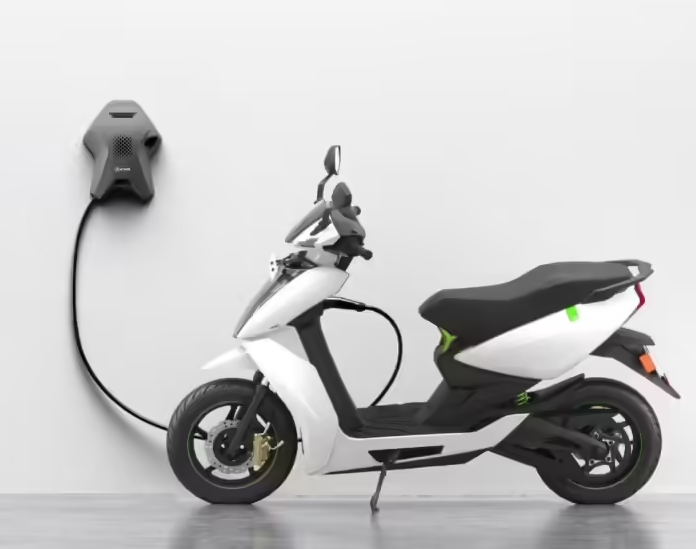
As some electric two-wheeler (e2w) OEMs publicly question the eligibility criteria of the production-linked incentive (PLI) scheme for the automobile sector, a senior government official has told ETAuto that the government could consider a fresh PLI scheme for startups and small scale enterprises.
But for this to happen, the industry would first need to build consensus and submit a detailed proposal. This official was responding to the charge by at least two e2w OEMs about the present PLI scheme for the automobile sector being solely focused on incumbent companies and large OEMs.
Ather Energy and at least one more e2w startup are believed to have raised concerns after remaining ineligible for incentives under the ongoing PLI scheme, where the current architecture only allows incumbents such as arch rival Ola Electric, Hero MotoCorp, Bajaj Auto and TVS Motor Company. As per the guidelines of the PLI scheme, any OEM applicant claiming benefits under it must have group global turnover of at least ₹10,000 crore (₹500 crore for a component maker) and should also have invested ₹3,000 crore in fixed assets. For non-automotive companies, the turnover should be at least ₹1,000 crore. Such stiff turnover criteria automatically exclude startups.Under the existing scheme, if applicants meet the turnover criteria, they must then produce vehicles or components where 50 per cent domestic value addition (DVA) has been done. If the applicants meet all these conditions, they can claim anywhere between 13-16 per cent of ‘determined sale value’ as incentives from the government.
‘Can’t reopen current PLI’
The official quoted above dismissed demands by some e2w OEMs about reopening the current PLI scheme for allowing them in.“No new applications are possible in the current PLI scheme. This scheme was approved by the Union Cabinet and for any changes, we will have to take the proposal back to the Union Cabinet. This is not possible…But if e2w industry startups and innovators feel they need to also be part of an incentive scheme, the industry must form a view and make a representation. This should be submitted to DPIIT (Department for Promotion of Industry and Internal Trade) or the Ministry of Micro, Small and Medium Enterprises,” he said.His comments on the possibility of a new PLI scheme for auto sector startups and small scale firms come just when the Startup Policy Forum (of which Ather is a member), a collective of the startup community, is believed to have written to the government and underlined the exclusion of startups and new-age companies from the existing incentive scheme.
The existing scheme
The PLI Auto scheme, as the name suggests, incentivises local production of only those products which achieve a domestic value add (DVA) of 50 per cent. The scheme was unveiled by the government in 2021, with a budgetary outlay of ₹25,938 crore.It had proposed financial incentives to automobile OEMs and component makers, to boost domestic manufacturing of Advanced Automotive Technology (AAT) products and attract investments in the automotive manufacturing value chain.
The scheme was focused on Zero Emission Vehicles (ZEVs) i.e. Battery Electric Vehicles and Hydrogen Fuel Cell Vehicles. The incentives under the scheme were initially applicable from 2022-23 to 2026-27 (5 years) and the disbursement of incentives was to begin 2023-24 and continue till 2027-28. But the scheme was later tweaked, so that disbursement of incentives is now scheduled to begin in the current fiscal year, 2024-25.
As per official data, in 2024-25, Tata Motors was the biggest beneficiary of the scheme at ₹142 crore, followed by Mahindra & Mahindra at ₹105 crore and Ola Electric at ₹74 crore. In the current fiscal, Tata has already received ₹403 crore as incentives, Bajaj Auto got ₹626 crore, M&M got ₹284 crore, TVS got ₹321 crore and Ola got ₹367 crore.
The official quoted above said that as on date, eight applicants under the ‘Champion OEM category’ have received DVA certification for 94 product variants, while 10 applicants under the ‘Component Champion’ category have received DVA certification for 37 variants.
Incentives have been provided for over 10.42 lakh units of e2w, 2.38 lakh units of electric three wheelers, nearly 80,000 electric four wheelers and close to 1400 electric buses.
Join the community of 2M+ industry professionals.
Subscribe to Newsletter to get latest insights & analysis in your inbox.
All about ETAuto industry right on your smartphone!
- Download the ETAuto App and get the Realtime updates and Save your favourite articles.