Autobayng News Team

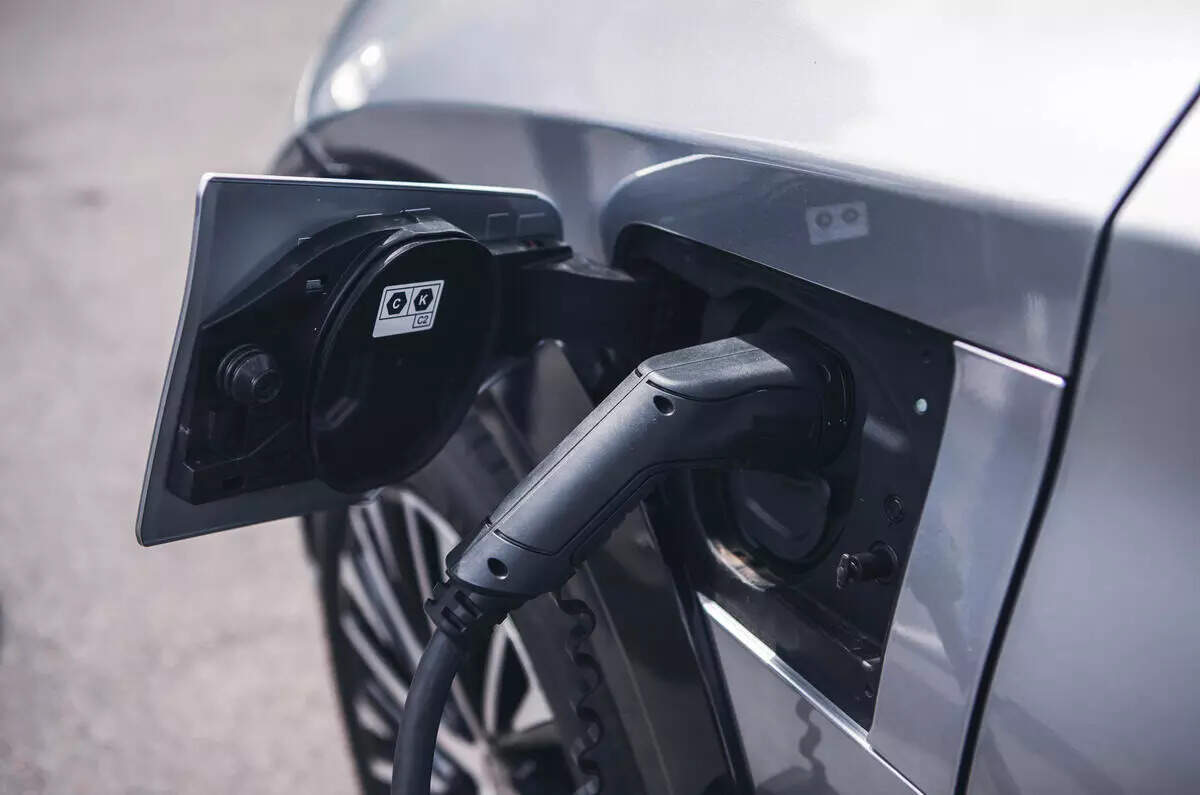 The proposal aims to promote more energy-efficient EVs while preventing manufacturers from using EV credits to offset higher emissions from their ICE portfolios.
“>
India may strip electric cars of their zero-emission status under proposed fuel-efficiency rules, a step that could force automakers to make these eco-friendly vehicles more energy-efficient.As per the proposal, automakers will have to factor power consumption while making compliance calculations for electric vehicles (EVs). Emissions from such vehicles will be determined by converting energy consumption (kWh/100km) into a petrol equivalent (litres/100km).”This mandate on electric car makers will encourage more energy efficient EVs,” a senior official told ET. “This means future EVs will need to go longer distances with lower energy consumption to ensure car makers do not face penalties. While EVs have zero tailpipe emissions, they do consume energy which should be conserved.” India produced 1056.43 billion units (BU) of electricity from coal-fired power plants until January-end this fiscal year. It generated 137.51 BU from solar and 94.81 BU from wind sources during the period. If finalised, the proposal would run contrary to carmakers’ demand to peg EV emissions at zero in the proposed Corporate Average Fuel Efficiency (CAFE) norms. While CAFE norms were initially aimed at reducing petrol and diesel consumption, their relevance in curbing vehicular CO2 emissions has grown.Marking EV emissions at zero will allow carmakers to introduce multiple models running on batteries, allowing them to gain super credits to offset higher emissions from their ICE portfolio, even with limited sales.
“Globally, countries regulate either CO2 emissions or energy consumption,” said a person familiar with the matter. “Energy can never be zero. In India CAFE norms come under the Energy Conservation ACT. Whether you look at it scientifically or legally, you cannot accord zero emission status to EVs.” The fresh changes are part of a revised CAFE proposal finalised by the Bureau of Energy Efficiency (BEE). It would plug a gap in the norms since currently carmakers are allowed to introduce multiple EVs, and even with limited sales, they are able to fetch super credits to offset higher emissions from their larger ICE portfolio.
Under CAFE 3 norms, car makers can be penalised for selling higher-emission vehicles. However, those who also make EVs and hybrids can offset these penalties by credits earned from selling eco-friendly cars or by purchasing them from other carmakers.
As per the proposed guidelines, sellers of EVs or range-extender hybrid EVs will be given three super credits, while internal combustion engine (ICE) cars earn them one point. Industry representatives said this has been retained in the recommendations forwarded by BEE to the Prime Minister’s Office (PMO).
“The government seemed concerned that assuming zero emissions for EVs in CAFE-III calculations would deter manufacturers from investing in improving fuel efficiency of their ICE vehicles,” said an industry representative.EVs comprised 4 per cent of total domestic passenger vehicle sales in 2025. This is expected to increase to 13-15 per cent by 2030, with the remaining 85-87 per cent of total industry car sales-estimated at around 6 million units by the time-still comprising ICE vehicles. This necessitates enforcing stricter compliance norms to boost fuel efficiency and vehicular emissions, industry watchers said.
The Centre’s latest proposal equates the thermal energy content of one litre of petrol-about 35 megajoules-to the electrical energy in kilowatt-hours with 1 kWh equaling 3.6 megajoules. This conversion will allow the regulator to add the energy used by a fleet of EVs to other cars and arrive at a manufacturer’s total energy footprint.
Join the community of 2M+ industry professionals.
Subscribe to Newsletter to get latest insights & analysis in your inbox.
All about ETAuto industry right on your smartphone!
- Download the ETAuto App and get the Realtime updates and Save your favourite articles.