

 Autobayng News Team

- EV collision repair costs are now at their lowest point this year.
- Repair prices have slowly gone down in 2025, despite EV sales significantly ramping up in the third quarter.
- That said, collision repairs on EVs are still more expensive than on PHEVs, hybrids or gas cars.
Here’s some good news for the end of the week. Collision repair prices for electric cars are at their lowest since the last quarter of 2024, according to data from Mitchell, a company that develops auto physical damage technology solutions.
A lot of EVs hit the streets of the United States in the third quarter of this year, as car buyers rushed to take advantage of the $7,500 federal tax credit that expired on September 30. Sales of EVs in the United States jumped 36% in Q3 compared to the same period last year, and as a result, the number of EV owners going to repair shops to have their cars fixed also went up. Photo by: InsideEVs


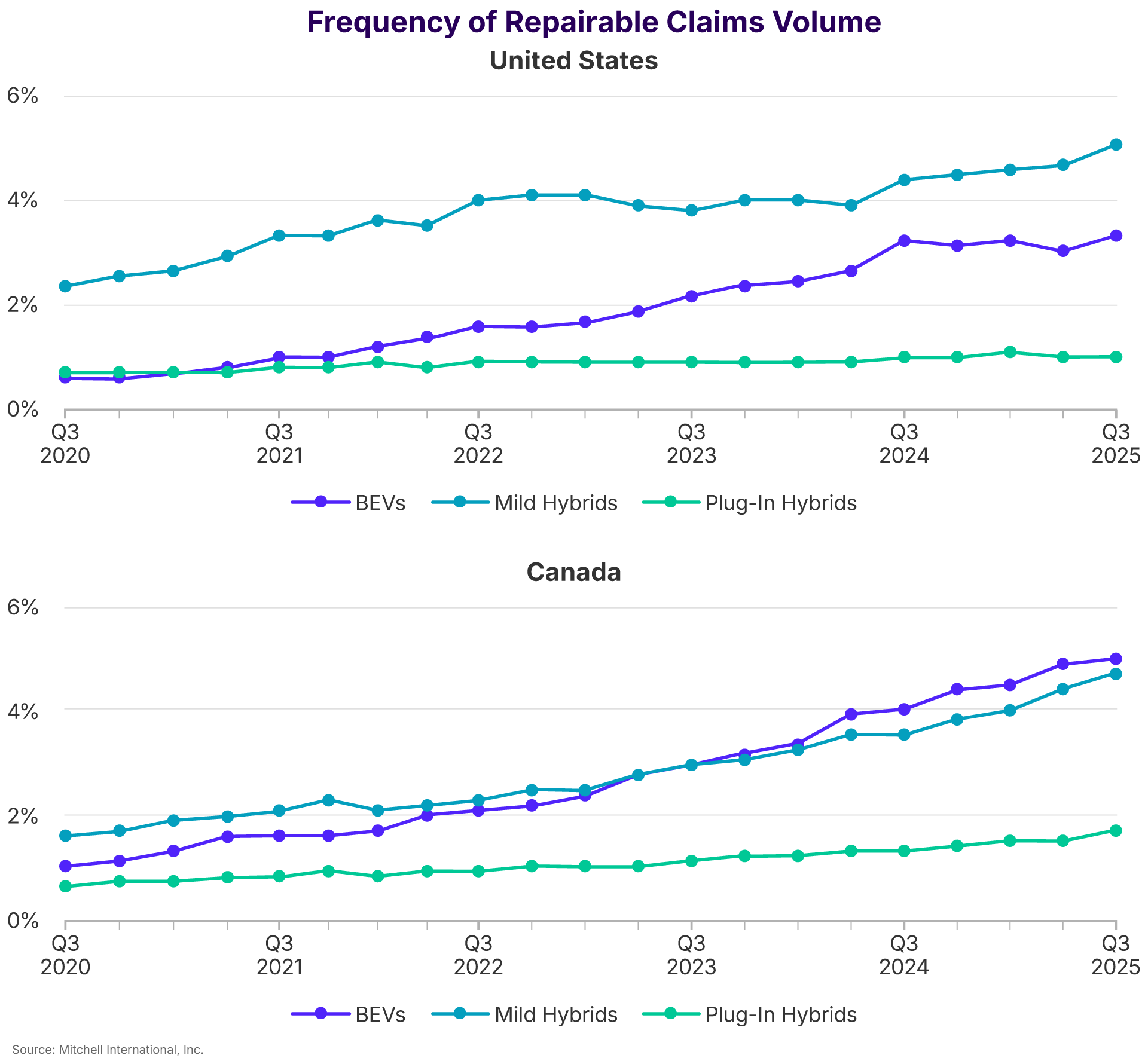

According to Mitchell, claims frequency for repairable, collision-damaged EVs reached 3.21% in the U.S. in the previous quarter, an all-time high and a 4.2% increase year-over-year.
Despite all of this, the average cost for collision repair went down 2.4% compared to the second quarter and is now at the lowest level since the beginning of the year. That’s great news for anybody who was apprehensive about getting an EV because of high repair costs.
However, it’s worth noting that EVs are still the most expensive type of vehicle to repair after a collision, with the average claim severity in the U.S. being $6,185. That’s more than plug-in hybrids, which cost $5,529 on average, followed by mild-hybrids ($4,983) and traditional combustion-powered vehicles ($,4,974).
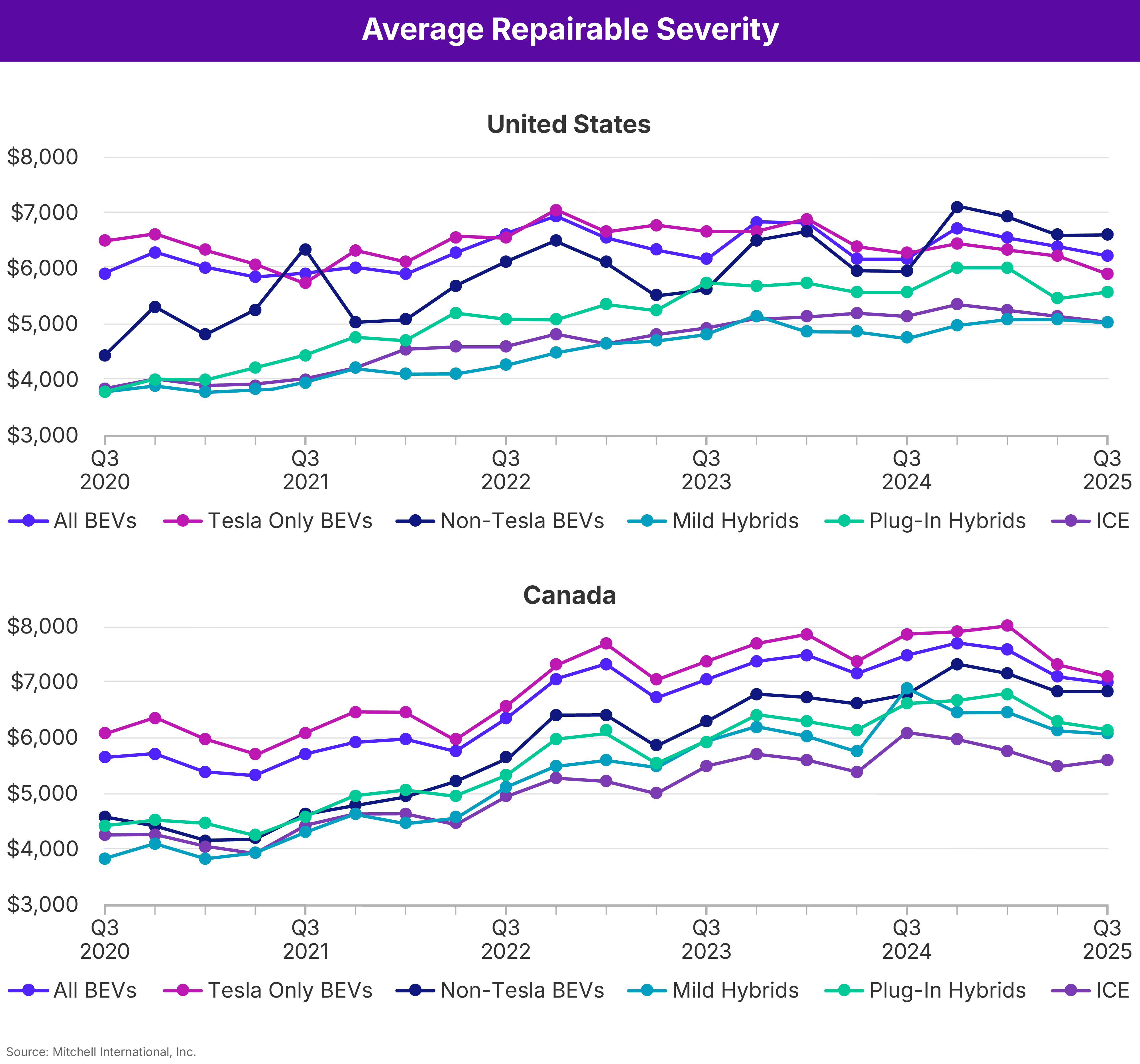
Photo by: InsideEVs
The difference between EVs and gas cars is getting smaller, though, even as more battery-powered cars hit the market. A big reason why EVs are more expensive to repair after a collision comes down to the availability of parts. Per Mitchell, 85.13% of the parts used to repair EVs were Original Equipment Manufacturer (OEM), while the number for ICE vehicles is 62.30%. In other words, there are not enough aftermarket parts available yet for EVs, which are often cheaper than OEM-sourced parts.
There’s also the issue of parts’ repairability. On EVs, 13.51% of the damaged parts can be repaired, whereas 15.96% of ICE parts can be repaired after a collision. Fewer repairable parts mean the final repair cost will be higher because new bits have to be ordered and installed.
Unsurprisingly, the cars that top the collision repair charts are some of the best-selling ones out there. In the U.S., the Tesla Model Y, which has been the best-selling EV for a good number of years, has the highest percentage of repairable claims, 30.57%. The Tesla Model 3 is second, with 26.68% of the claims, followed by the Ford Mustang Mach-E, with just 5.77%. Fourth place goes to the Tesla Model S, with 4.74% of the repairable EV claims, while the Tesla Model X is fifth, with 3.91%.
In Canada, the top five chart is a little different. The Tesla Model 3 has the most claims for collision repairs, followed by the Tesla Model Y and Ford Mustang Mach-E. Fourth place is occupied by the Hyundai Ioniq 5, while fifth place goes to the Hyundai Kona EV. Related Stories We want your opinion! What would you like to see on Insideevs.com? – The InsideEVs team
