Autobayng News Team


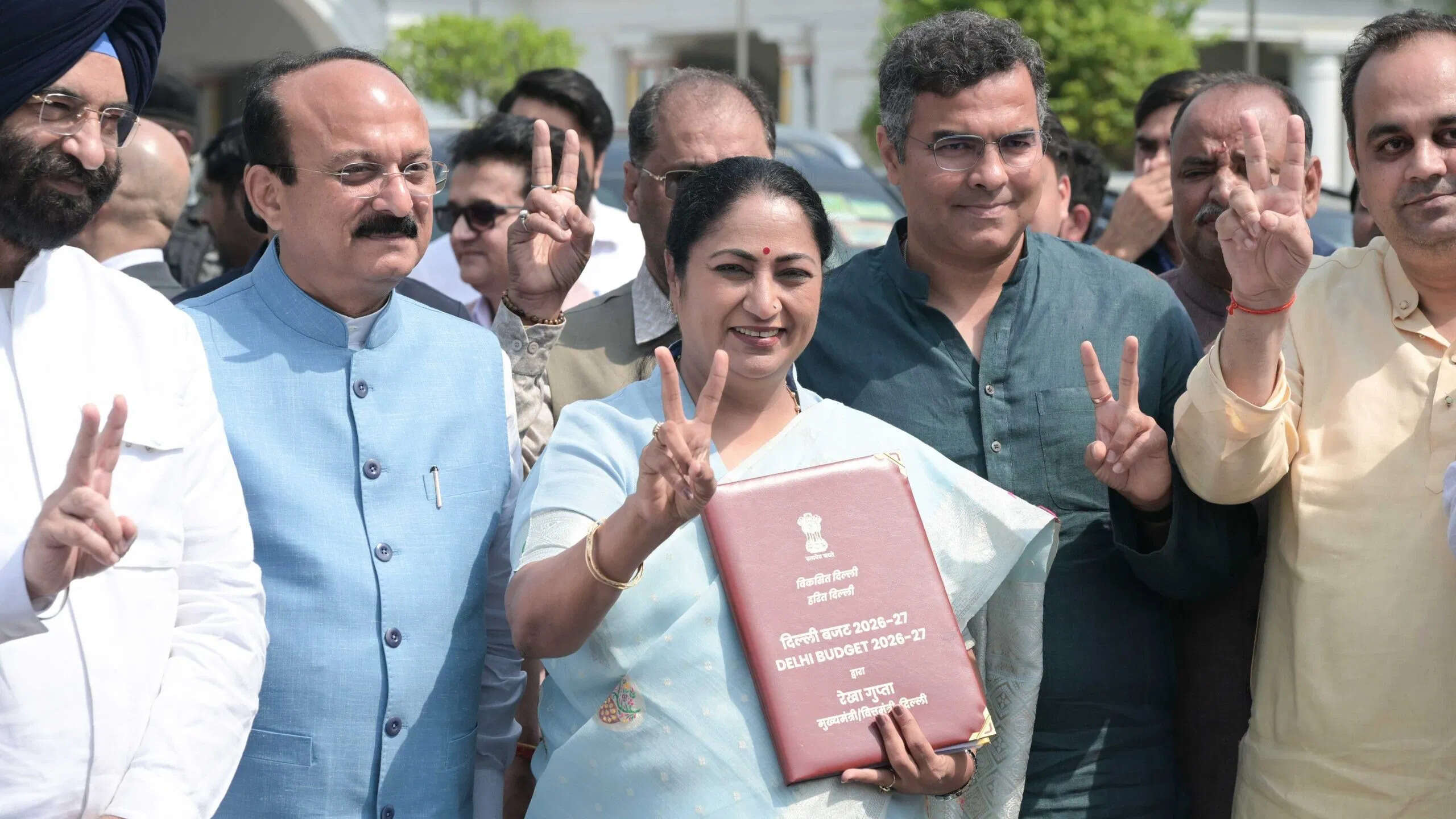 Gupta announced a carbon monetisation scheme and earmarked ₹ 2 crore for Delhi Pollution Control Committee (DPCC) to revamp its ‘war-room’, mobile app and real-time tracking mechanism.
“>
Chief minister Rekha Gupta presented Delhi’s “first green budget” on Tuesday — earmarking ₹22,236 crore or 21.4 per cent of the total allocation — to address a plethora of environmental concerns, including air and water pollution, plaguing the city.“We are making Delhi a courtyard of greenery, not a concrete jungle. Every policy of this budget has been viewed through a green lens. Every policy incorporates environmental concerns, every scheme reflects nature, and every decision takes into account the welfare of future generations. This budget represents a historic shift in the approach of governance, where a balance has been struck between development and the protection of Mother Earth,” the CM said.PWD and MCD will get a total of ₹2,392 crore for end-to-end recarpeting and redevelopment of roads to make them free of dust. Money will also be spent on strengthening public transport with a focus on electric mobility.
The allocation to the environment and forest department has been increased by 62.7 per cent — from ₹505 crore in 2025-26 to ₹822 crore in 2026-27. To ramp up Delhi’s green cover, Gupta said 35 lakh trees of native species like peepal, mango and neem — all ‘oxygen givers’ — will be planted in the next four years. Besides, ₹130 crore has been allocated for forest development, ₹ 44 crore for wildlife protection and ₹25 crore for Delhi Parks and Garden Societies.
An amount of ₹200 crore has been kept for rejuvenation of the Yamuna and other water bodies. Solar panels will be used to cover drains so that no garbage can be dumped and energy is generated. A total of 1,500 tonnes of cow dung produced daily in the city will be processed for energy generation so that the dung does not enter the river through the drains.Gupta announced a carbon monetisation scheme and earmarked ₹2 crore for Delhi Pollution Control Committee (DPCC) to revamp its ‘war-room’, mobile app and real-time tracking mechanism.
To reduce dust pollution, ₹1,392 crore has been allotted for end-to-end recarpeting and redevelopment of 750-km roads under PWD. Similarly, ₹1,000 crore has been set aside for developing MCD roads. Besides, ₹504 crore has been allocated for deployment of water sprinklers integrated with anti-smog guns, mechanical road sweeping machines and water tankers.
The city’s waste-processing capacity is set to increase from 7,000 metric tonnes to 15,000 metric tonnes owing to a proposed expansion of waste-to-energy plants at Narela, Okhla, Ghazipur and Tehkhand, the CM said.
To deal with vehicular pollution, Delhi govt has set a target of rolling out 12,000 electric buses by 2029. It has earmarked ₹200 crore for Delhi Electric Vehicle Policy 2.0, including the expansion of the charging infrastructure. With an aim of reducing traffic congestion, ₹575 crore will be spent on completing eight pending flyovers and underpasses.
The budget also has a provision for the expansion of Delhi Metro and Regional Rapid Transit System (RRTS), with allocations of ₹2,885 crore and ₹568 crore, respectively.
Anumita Roychowdhury, executive director (research and advocacy) of Centre for Science and Environment, said the budget delivers mixed signals. “Commendable investments in clean transit, charging infrastructure and EV purchase-and-scrap schemes are undermined by contradictory spending on car-centric flyovers and underpasses that ignore last-mile transit accessibility.
Furthermore, pollution efforts remain fixated on emergency dust control measures, while the EV Policy 2.0 lacks definitive zero-emission targets. Finally, while expanding waste processing and generation of gas hold potential, it must strictly be driven by 100 per cent segregation at source,” she said.
Join the community of 2M+ industry professionals.
Subscribe to Newsletter to get latest insights & analysis in your inbox.
All about ETAuto industry right on your smartphone!
- Download the ETAuto App and get the Realtime updates and Save your favourite articles.