Autobayng News Team

- Published On Apr 11, 2026 at 07:21 PM IST
- Read by 100 Professionals
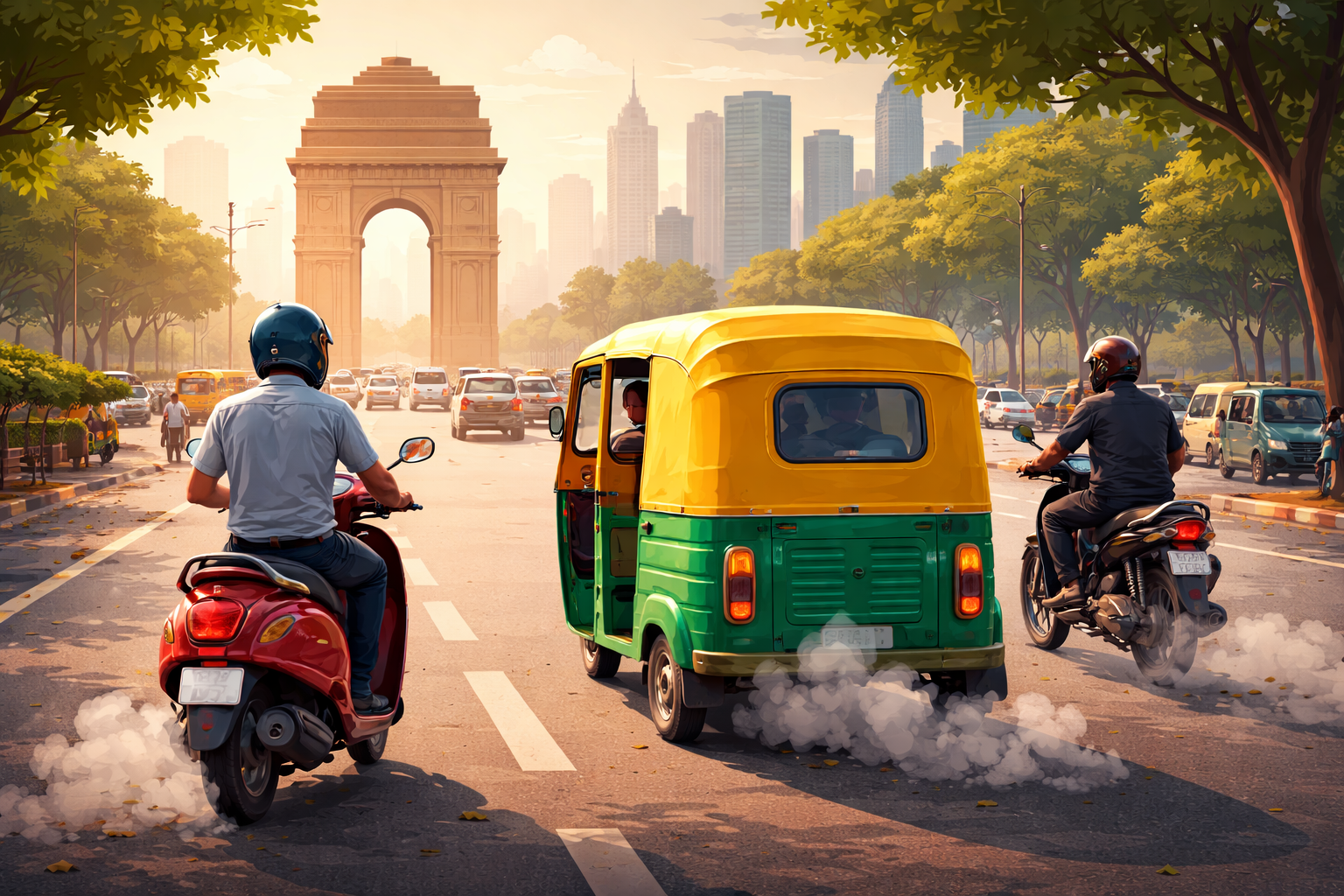 The policy aims to reduce air pollution, with vehicular emissions contributing nearly 23 per cent of Delhi’s pollution.
“>
The Delhi government has released the draft Delhi Electric Vehicle (EV) Policy 2026–2030 for public feedback, outlining a shift towards electric mobility through restrictions on petrol vehicles, fleet requirements, incentives and expansion of charging infrastructure.The draft proposes a ban on new petrol two-wheeler registrations from 2028 and petrol three-wheelers from 2027. The policy will remain open for comments for 30 days before being finalised and notified, after which it will remain in force until 2030.According to the document, the policy aims to reduce air pollution, with vehicular emissions contributing nearly 23 per cent of Delhi’s pollution. It also cites the Right to Clean Air under Article 21 of the Constitution.
Mandates, incentives and tax relief
From 2028, only electric two-wheelers will be permitted for new registrations, while only electric three-wheelers will be allowed from 2027. The draft also proposes that at least 30 per cent of school buses should be electric by 2030, along with a transition of the government fleet to electric vehicles.
For buyers, incentives are linked to battery capacity. Electric two-wheelers priced up to ₹2.25 lakh will receive ₹10,000 per kWh in the first year, capped at ₹30,000, ₹6,600 per kWh in the second year, capped at ₹20,000, and ₹3,300 per kWh in the third year, capped at ₹10,000.
Electric three-wheelers may receive ₹50,000 in the first year, ₹40,000 in the second year and ₹30,000 in the third year. Electric goods vehicles in the N1 category are eligible for ₹1 lakh in the first year, ₹75,000 in the second year and ₹50,000 in the third year.
Scrapping incentives have been proposed at ₹10,000 for two-wheelers, ₹25,000 for three-wheelers, ₹1 lakh for cars priced up to ₹30 lakh and ₹50,000 for goods vehicles.
The draft also proposes 100 per cent exemption on road tax and registration fees for electric cars priced up to ₹30 lakh until 31 March 2030. Vehicles priced above this threshold will not be eligible. A 50 per cent exemption has been proposed for strong hybrid vehicles.
Public feedback and policy context
The Transport Department has invited feedback from stakeholders and the public. Comments can be submitted by email to evpolicy2026@gmail.com or by post to the Joint Commissioner (EV), Transport Department, Government of NCT of Delhi. The notice states that submissions will only be accepted within the 30-day window.Officials state that the policy is part of efforts to reduce dependence on fossil fuels and improve air quality. Health Minister Pankaj Kumar Singh said more than one lakh electric vehicles have been registered in Delhi since the current government assumed office, adding that subsidies are now being provided.Once finalised, the policy is expected to guide Delhi’s electric mobility framework until 2030.
Join the community of 2M+ industry professionals.
Subscribe to Newsletter to get latest insights & analysis in your inbox.
All about ETAuto industry right on your smartphone!
- Download the ETAuto App and get the Realtime updates and Save your favourite articles.