Autobayng News Team

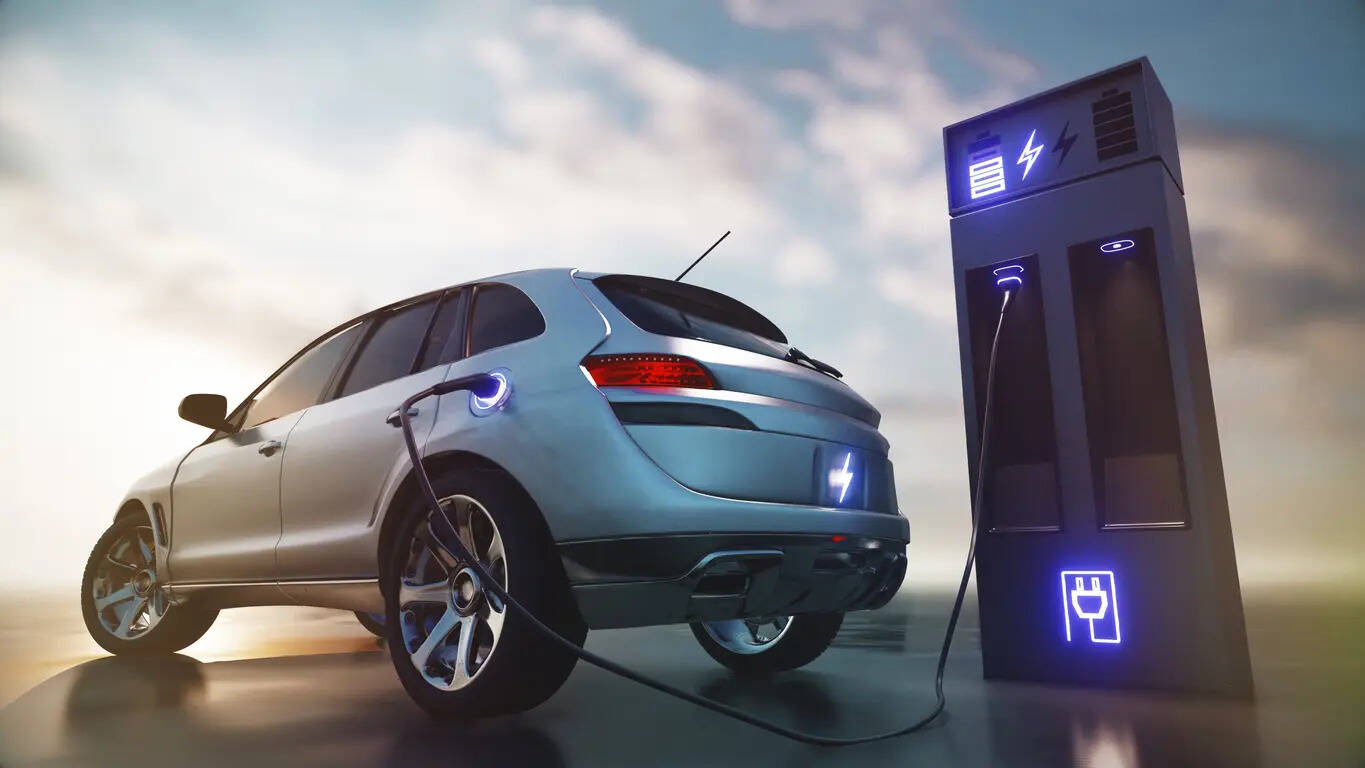 Most battery electric vehicles (BEVs) are expected to achieve upfront cost parity with internal combustion engine (ICE) vehicles by 2030.
“>
Global think tank and research organisation International Council on Clean Transportation (ICCT) expects most Battery Electric Vehicles (BEV) to reach cost parity with ICE vehicles by 2030.
Its interim President and CEO Dr. Rachel Muncrief, in this interview with ETAuto’s Sumantra Bibhuti Barooah, argues why battery electric tech is the future, even though the EV story hasn’t progressed as per earlier projections.
How do you see the role of BEV (Battery Electric Vehicle) technology in the journey towards clean transportation? EV sales have not really moved as per projections in many cases.
From a technology standpoint, and a global standpoint, what we’re seeing is that it’s still very clear to us that the best technology out there for the long term is battery electric technology for on-road transportation – from two wheelers, all the way up to tractor trailers. And yes, it has a climate benefit too.
More importantly, I think right now there’s also a major economic benefit because it’s a technology that’s getting cheaper as battery cost continues to come down. And it’s cheaper for the consumer to own and operate. The upfront cost parity is there for some, though not for all yet. I think once we see upfront cost parity, that’s also going to help take off.
The reason that I think some of the uptake is a bit slower than people had originally thought was because some of the policies that would bring that upfront cost parity sooner, like maybe fiscal incentives or regulations that would sort of force manufacturers to sell certain amount of vehicles, some of those have been rolled back and loosened up.
So essentially, it’s slowed things down a bit, but it hasn’t at all changed the ultimate trajectory. So, deregulation does slow down technology adoption.
A section of industry, end-users put these very facts on the table saying, look at it, unless you have an external intervention in terms of the fiscal policies at the state level or the country level, there is no, the consumer is still not ready for it, or not welcoming it. How do you argue against such a viewpoint?
Well, I’ll just give you a great example from my recent visit to Beijing. As we know, the Chinese government has done huge investments in battery technology and that has really paid off. So now from everything I’m understanding, it’s actually cheaper in many cases for the manufacturers to make, to produce and sell an electric vehicle than a comparable ICE vehicle, which makes it cheaper then for the consumers to purchase.
And that was the Chinese government. That didn’t happen by accident. They had been looking at the future and thinking about this and planning for over 15 years.
They had an all out government approach. They were doing national, regional, city level policies, fiscal incentives, industrial policy, and all such sorts of things. It’s a holistic approach and it’s a package. It took many, many, many years. They had to stay the course and stay focused. It’s paying off because now they’re able to be leaders in this whole new industry and be a player in the global automotive sector, which really they weren’t 10 years ago.

China had a holistic approach, over a long period of time, to build its EV industry. The results are paying off nowRachel Muncrief, ICCT’s Interim President and CEO
And which also resulted in a shift of the epicentre, if you like, of the global automotive industry from Detroit to Beijing, or Shanghai.
It’s really incredible to see how the global auto market is shifting because, you know, you always had the big players in the US and Germany and in Japan and Korea. And now, you know, China is really coming in and they have a good product at a really good price and they’re taking market share and the consumers also are enjoying the product as well. So I think it’s really, really interesting to watch and I’m going to be interested to see how this ends up.
EV adoption trends of China, Europe, and USA are quite often talked about, but have you observed any new trends in markets which are not being talked about or perhaps not quite in focus yet, when it comes to BEV adoption?
That’s really interesting what you’re saying, because you do have markets in the US, Europe, where you do have a domestic industry. And I know that there’s an instinct to kind of protect that industry. So, you might have other new emerging markets where they don’t sort of have a long automotive industry history. So, they’re not as likely to put in more protectionist type of policies and regulations. If you just look at Indonesia, they’re getting close to something like 30 per cent BEV sales.
Vietnam is, I think, over 40 per cent. Even interestingly, when you go over to Latin America, some countries that you might not expect are ramping up.Brazil is ramping up super, super quickly. They were less than 1 per cent I think, a couple of years ago. And now they’re getting close to 10 per cent.
Have there been any recent studies by ICCT where you kind of get a clear, more clarity in terms of when the cost curves of ICE and EV tech will cross, and also lead to a growth inflection point?
I see two groups of customers when it comes to personal vehicles. Individual consumers are going to care most about when the inflexion point happens at the upfront purchase parity, because most of the consumers are not going to do all of the math to figure out their total cost of ownership. They just want to look at the sticker price, and buy the vehicle that’s nicer and cheaper. So that’s already happening today in some markets, and in some vehicle segments.
And I would say, over the next five years, we’re going to see more and more of that. Most of our studies show probably by 2030, most of the battery electric cars will be at par (with ICE vehicles).
On the fleet vehicles side, because it’s a commercial enterprise, they are very, very used to total cost of ownership calculations. They know how to calculate total cost of ownership. So, I think total cost for them, total cost of ownership parity and below is going to be probably more the tipping point once they can be assured that they’re going to be able to be familiar with the technology, be able to charge it, those kinds of things.
Most of our studies show probably by 2030, most of the battery electric cars will be at par (with ICE vehicles)Rachel Muncrief
Another aspect is the overall green quotient of EVs. Some argue that in a country like India, where around 70 per cent of electricity comes from thermal energy, it doesn’t really make a strong case for EV. In such a scenario, because ICCT also assists in policy making, what should be the approach you think can be taken in India?
You’re totally right. We always look at the life cycle emissions when we’re trying to figure out which technologies are best. We’re not pushing battery electric vehicle technology for any reason, except for the fact that we know that it’s the most appropriate technology for clean transportation.
There may also be a perception that ICCT is lobbying for the EV industry.
Yeah, and that’s unfortunate.
It’s not really the case. If you go back and look at all of our studies, the reason that we sort of advocate in some ways for policies that promote battery electric vehicles is because all of our studies show that that’s by far the best technology in terms of the climate and health topic. So yes, there’s no tailpipe emissions, but yes of course, there are upstream emissions, not only from the electricity production, but also from the production of the vehicle in terms of the battery and the steel that’s going into the vehicle, everything.
We do work on full life cycle studies. Don’t forget that in parallel, while EVs are getting deployed in India, the grid is also getting cleaner currently.
There’s also a lot of policies and push in India to clean up the grid as well and to reduce carbon intensity of the grid. So, It doesn’t make sense from a climate or health perspective to wait until the grid is perfectly clean to start deploying electric vehicles. You want to do the two things in parallel.
And then there is smart charging. You can actually leverage these two things together. For example, once you have a lot of electric vehicles on the road, you can use that to actually reduce the amount of peaking type of activities that usually are associated with very high electricity emissions in countries so that you can actually see it as a complementary way to introduce both technologies at the same time.
Imagine you buy a car (EV) today and actually 10 years from now, it’s cleaner than it was when you first bought it. And that’s what’s happening.
So therefore, would you recommend a huge and growing market like India to focus more holistically and come up with various interventions for the automotive industry and allied areas, to have a positive bearing on the automotive industry in terms of EV adoption.
Yeah, ICCT very much believes that, you know, technical, rigorous data can be used to support the best policymaking. And that’s what we try to do. But I understand that while, you know, our organisation’s mission is about climate and health, sometimes economics is a much more important driver.
So I think it’s also good to remember that it’s good for the domestic economy as well, because, again, globally, this is where it’s going. So if you want your automotive industry to be thriving and creating jobs, and a lot more export opportunities, there also needs to be, like you said, holistic investments in the technology to be able to be global players, because you don’t want to be the laggard and you don’t want to kind of give up a potential great economic opportunity as well.
If India wants its automotive industry to be thriving, and creating jobs and a lot more export opportunities, there also needs to be holistic investments in BEV technology to be able to be global playersRachel Muncrief
A set of OEMs are strong believers that hybrid is the more practical approach for the electrification/clean mobility journey. And they may say that, look at the data, hybrid options are finding takers despite a big difference in taxation levels. So how do you argue against that?
There’s certainly nothing wrong with hybrid technology. It definitely is cleaner and more efficient than pure IC technology without the hybridisation. But battery electric technology is, again, where it’s going. If it’s not today, it’s going to be in the near future, the cheaper alternative and again, a better technology. The thing I always think about with hybrids is you basically have two powertrains. You have a battery and you also have an engine and you basically have to pay for and maintenance of those.
So, when you move to an all battery electric, you dramatically reduce the sort of maintenance and eventually the cost. It really depends on how quickly the battery costs come down.
Join the community of 2M+ industry professionals.
Subscribe to Newsletter to get latest insights & analysis in your inbox.
All about ETAuto industry right on your smartphone!
- Download the ETAuto App and get the Realtime updates and Save your favourite articles.