Autobayng News Team

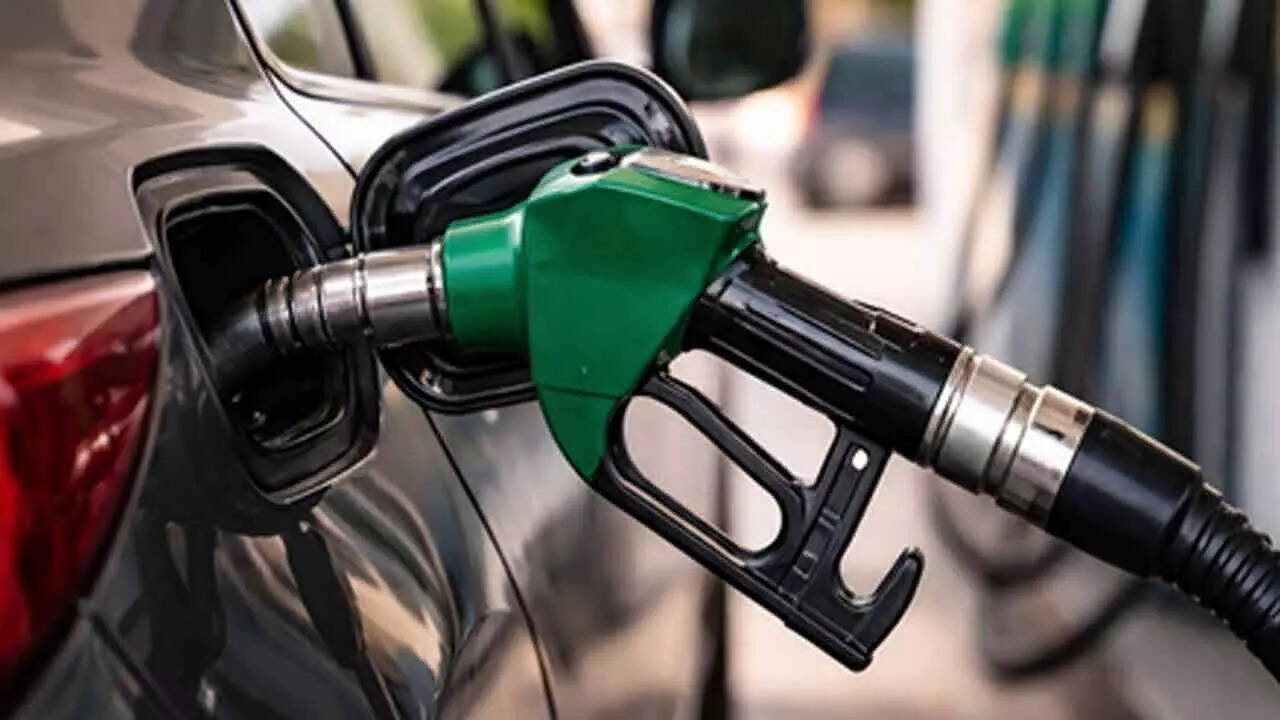 Rising fuel prices are driving inflation, straining household budgets, and pushing demand toward fuel-efficient and electric mobility.
“>
The last 10 days have seen four price hikes in petrol and diesel totalling nearly ₹7.50 per litre thus far.
It is happening at a time when joblessness is on the rise and inflation is already hurting households. Petrol has already crossed the ₹100/litre mark across the country, while diesel is averaging over ₹95/lt.
Meanwhile, oil companies continue to lose money on these fuels, though their under-recoveries have fallen from the dizzy levels of ₹1,000 crore daily in the early days of May.
It was a given that the Centre would not raise prices till the Assembly elections were over across West Bengal, Assam, Kerala and Tamil Nadu. There was no way voters would back a political party that burned a hole in their pockets.
Now with the elections out of the way, the Centre had no option but to bite the bullet and hike prices of petrol and diesel, while LPG saw an increase earlier.
According to industry experts, there was really no way out with the West Asia war showing no signs of abatement while oil has become even more expensive. To top it all, supplies have been hindered by the partial closure of the Strait of Hormuz, where only a limited number of ships can reach India.
Harder times ahead
As top economists and industry voices have already articulated, the coming days and months are going to be extraordinarily difficult as a result of high energy prices coupled with shortage challenges. Reports have already been doing the rounds of people queuing up at fuel outlets with the occasional scuffle also breaking out due to high anxiety and anger levels.
The prospects for stagflation are now very real, where the ingredients of high prices, unemployment and sluggish economic growth come together in a difficult recipe. Policymakers insist that India is still better off than many other countries around the world.
However, that is hardly any source of comfort at a time when the rupee is inching towards the ₹100 mark to the US dollar, making oil imports in particular prohibitively costly.
Apart from this, the forecast for the rains this year is little cause for cheer, with a ‘slightly below’ level outlook of 92 per cent. This does not augur well for the tractor industry or construction equipment makers.
As power cuts get more pronounced, diesel will be used in generator sets in residential communities and farms. The costs incurred as a result will only fuel inflation and dampen buying sentiment across the country.
I think WFH and comparison with COVID is a bad idea when it comes to fuel saving. We cannot stop trade, close markets, banks, restaurants, hotels, factories, etc. GDP growth must be the focus and, hence, physical movement is necessaryTop auto sector executive
Clearly, all this has a fallout on the auto sector, which has actually been doing quite well in this grim backdrop. However, the cumulative price hikes of over ₹7/litre of petrol and diesel in May will have its consequences for sure. Truck freight costs are going to escalate as
diesel gets even more expensive with further price hikes.
Balancing household budgets
This will stoke inflation, and consumers will be hard-pressed to balance their household budgets as prices of fruits and vegetables go through the roof. There is also a lower likelihood of ICE two-wheelers being sought after as they were till a few months ago, simply because petrol is way more unaffordable today, and its price spiral will continue in the coming days.
Top industry observers believe the affluent segment of the population will continue to buy ICE cars, since spending more is no big deal for this group. According to them, sales of electric 2- and 3-wheelers will gain momentum as buyers seek lower operating costs that ICE versions cannot offer following the steep price hikes in petrol and diesel.
Right now, manufacturers of electric 2-wheelers are facing a situation where demand is outstripping supply, and increasing capacity has become a top priority. The coming months will see the likes of TVS Motor, Bajaj Auto, Ather Energy and Hero MotoCorp pull out all the stops in boosting the number of electric scooters.
Likewise, electric cargo 3-wheelers will get a bigger boost as diesel becomes less viable due to its high price tag. The e-commerce boom, which began during Covid, continues and products from Mahindra, Bajaj and a host of startups like Euler Motors will dominate
the landscape.
There was a lot of brouhaha about electric a few years back before hybrids came into the picture. Likewise, there is no harm contemplating an ethanol, petrol mix, but this will need careful understandingIndustry expert
Step-by-step approach
The Centre has also been talking about using flex-fuels like ethanol/petrol, but industry observers are of the view that this needs a step-by-step approach rather than rushing into a new space without giving it enough thought.
“There was a lot of brouhaha about electric a few years back before hybrids came into the picture. Likewise, there is no harm contemplating an ethanol, petrol mix, but this will need careful understanding. Even a country like Brazil, which leads this space, had to go through a rigorous drill in studying the effects of ethanol cars,” says an industry expert.
There have also been talks of reviving the work-from-home (WFH) business model, which gained ground during Covid. This time around, the idea is to reduce the use of auto fuels whenever possible.
Whether this is actually workable is a moot point since WFH during the The pandemic was to ensure social distancing and protect lives. Today, while conserving the use of petrol and diesel is a noble objective, it will do little to boost economic activity.
As a top auto sector executive says, “I think WFH and comparison with COVID is a bad idea when it comes to fuel saving. We cannot stop trade, close markets, banks, restaurants, hotels, factories, etc. GDP growth must be the focus and, hence, physical movement is necessary.”
In parallel where is the massive investment in electric generation and storage to support the energy intensive future? Nuclear power plants, coal plants, hydel power plants and storage? Wind and solar do not make the cut even with today’s capacityTop auto sector executive
Learning from Japan
According to him, while at best some jobs can be partially done via WFH, its impact is rather limited. A sounder strategy is to adopt what the Japanese did during the oil shock, which will include a) prioritising energy efficiency and highly fuel-efficient vehicles through fiscal measures; b) improving public transport and encouraging people to get out of cars and into public transport, even if that means ICE buses rather than EV options.
The executive believes energy efficiency will improve compared to cars, etc. This will also require focus on last-mile solutions – high efficiency, low speed, etc.
Finally, it is important to address the challenge of improving the energy efficiency of appliances sold in India. Household power consumption from refrigerators, washing machines, fans, kitchen appliances, air conditioners, etc., must be a core focus for improvement across the industry and offices.
None of this is “rocket science” but it is the non-headline-grabbing hard work that is required to keep advancing the tech and energy efficiency frontier, which eventually matters.
“In parallel where is the massive investment in electric generation and storage to support the energy intensive future? Nuclear power plants, coal plants, hydel power plants and storage? Wind and solar do not make the cut even with today’s capacity,” says the executive.
These are tough times for sure in India, and the Centre will have its work cut out in walking the fiscal tightrope. The well-known adage — when the going gets tough, the tough get going — will be put to the test in the coming months.
Join the community of 2M+ industry professionals.
Subscribe to Newsletter to get latest insights & analysis in your inbox.
All about ETAuto industry right on your smartphone!
- Download the ETAuto App and get the Realtime updates and Save your favourite articles.