Autobayng News Team

 Beyond the obvious savings at the ‘refuelling’ stage, EVs are also increasingly pulling ahead of ICE vehicles when it comes to maintenance.
“>
Fuel price movements continue to directly impact monthly household budgets. For city commuters, long-distance office runs, or ride-hailing drivers, monthly fuel bills can creep up before your next chai break. That’s often enough to make first-time buyers pause or rethink their plans of owning a car.
EVs flip that equation. Instead of tracking petrol prices every other week like with internal combustion engine vehicles, you’re dealing with electricity costs that are far more stable. That alone takes a lot of pressure off.
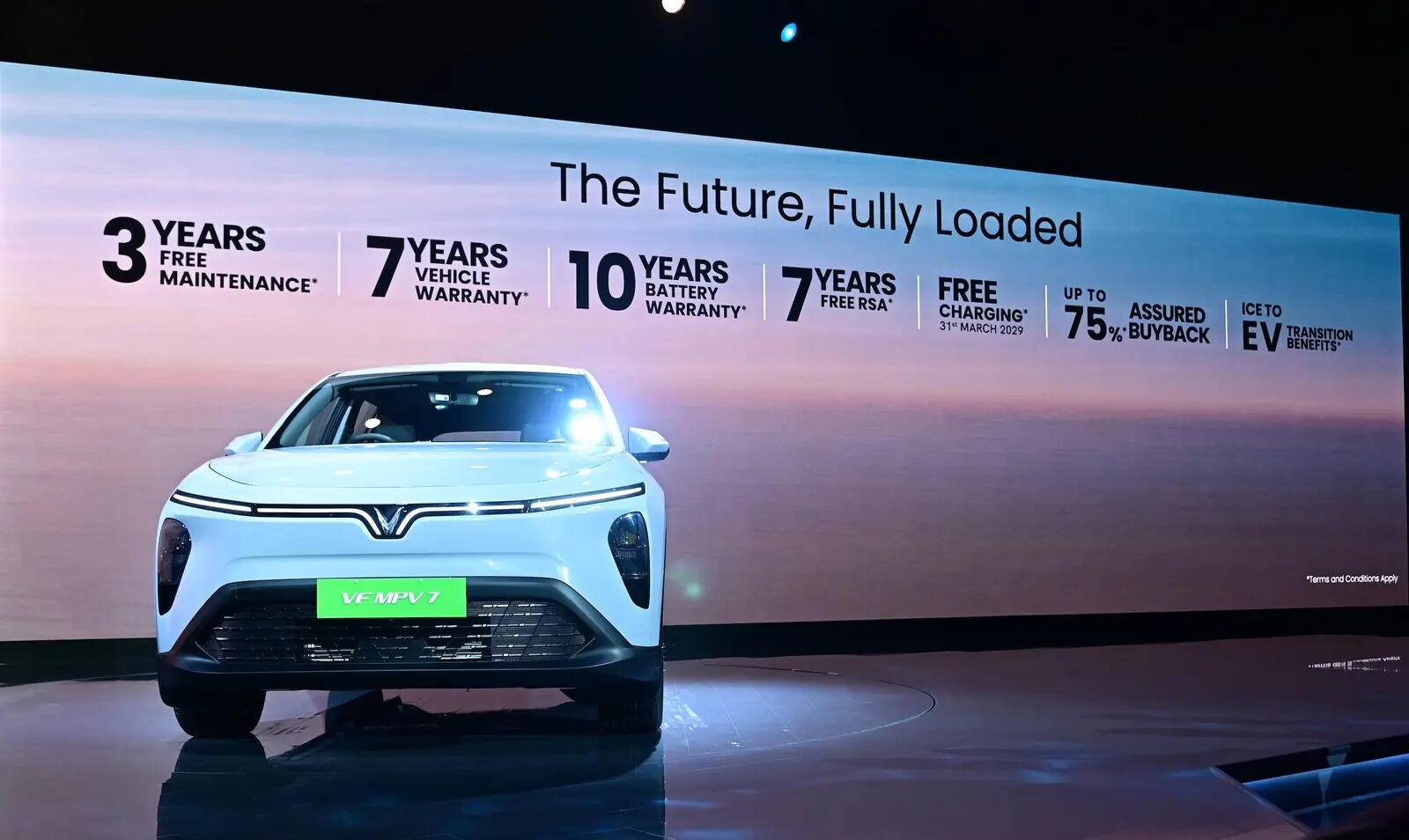
For customers of EVs such as the ones from VinFast, a new entrant in India, the cost equation becomes even more predictable, or even close to zero, because of the company’s free charging offer at its partner charging stations V-Green. The free offer remains valid until March 31, 2029, alongside complimentary maintenance for up to three years or 36,000 km.
With EVs, there’s also a gradual consumer mindset shift. When every trip isn’t tied to fuel cost anxiety, people tend to drive more freely. No second-guessing short trips or weekend drives. That’s a big deal in Indian cities where daily travel patterns can be all over the place.
Lifetime cost savings
Beyond the obvious savings at the ‘refuelling’ stage, EVs are also increasingly pulling ahead of ICE vehicles when it comes to maintenance. While ICE cars come with a long checklist of oil changes, filters, gearbox upkeep, and a bunch of small things that add up over time, EVs skip almost all of that. Fewer moving parts, less wear and tear, and fewer trips to the workshop, both for repairs and routine service.
This is not just talk, and there’s data backing it up. Most recently, a study presented at the Malaysia-based International Conference on Manufacturing and Production Technology (ICMPT 2026), which analysed nearly 5,700 vehicles in Vietnam between 2020 and 2024, compared VinFast EVs with ICE models. The findings show that after around 40,000 km, EVs enter a more stable phase with lower failure rates, while ICE vehicles begin to see increasing wear. In the 80,000 to 125,000 km range, EVs recorded fault rates of about 0.021 to 0.029 incidents per 1,000 km, compared with 0.025 to 0.034 for ICE vehicles.
There have been consumer concerns about safety of EVs, fueled primarily by some instances of thermal runaway incidents in vehicles with the emerging technology. However, timely regulatory interventions and standardisation have addressed those concerns by ensuring uniform enhanced safety levels of EVs.
In longer-term modelling, EVs also showed slower “aging,” meaning the chance of failure rises more gradually over time. For instance, after 12 years, cumulative failure probability was around 62.7 per cent for EVs versus over 81 per cent for ICE vehicles, widening further after 15 years.
This is largely due to EV’s simpler drivetrains, fewer friction-heavy components, and reduced mechanical wear, all of which translate into more predictable costs over the vehicle’s lifetime.
That helps explain why more buyers are embracing EVs. India’s EV market surged in 2025, with E4W sales rising 86 per cent year over year to more than 187,000 units. Momentum has continued into 2026: Electric passenger vehicle sales jumped 75.14 per cent in April to 23,506 units, from 13,421 units in the year-ago period, according to the Federation of Automobile Dealers Associations.
That helps explain why more buyers are warming up to EVs, especially when combined with brand-led incentives.
For example, beyond free charging and free maintenance, VinFast is offering an industry-leading warranty of up to 10 years or 200,000 km, along with customer-focused programs such as a value assurance scheme and trade-in benefits for customers switching from gasoline to electric vehicles. All of this makes the deal more compelling, helping customers go green not just environmentally, but financially as well.
That green balance sheet carries weight beyond personal savings when you plug EVs into a bigger national story. India still depends heavily on imported fuel, around 85 per cent by some estimates, which leaves the country exposed to challenges when global supply gets shaky. When things heat up in West Asia or key shipping routes get disrupted, prices back home react, maybe not immediately, but they tend to catch up sooner or later.
Viewed through that broader lens, EVs are no longer just about saving on fuel month to month, but about lowering total ownership costs, reducing exposure to global energy volatility, while also helping lessen pollution levels in areas where they are used. That makes the case stronger for EVs on both fronts.
Join the community of 2M+ industry professionals.
Subscribe to Newsletter to get latest insights & analysis in your inbox.
All about ETAuto industry right on your smartphone!
- Download the ETAuto App and get the Realtime updates and Save your favourite articles.