Autobayng News Team


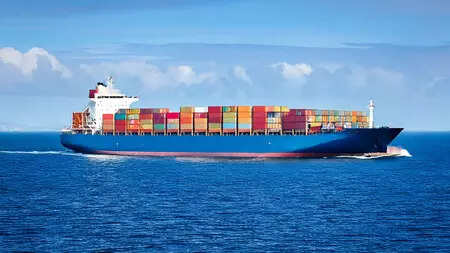
Andhra Pradesh has improved its ranking in the NITI Aayog Export Preparedness Index, moving from 8th place in 2022 to 5th place among all states in EPI-2024, which was released a few days ago. The exports from Andhra Pradesh touched 1.6 lakh crore mark in FY 2024 and have grown at an average rate of 6 per cent over the past five years.
The export profile reflects a mix of traditional and emerging sectors. Agriculture and aquaculture continue to play a major role. AP accounts for nearly 60 per cent of India’s marine product exports, with frozen shrimp and prawns alone earning 19,776 crore in FY24. Pharmaceuticals are another key growth driver, with medicament exports worth 10,875 crore, mainly from Jawaharlal Nehru Pharma City in Visakhapatnam. This performance has placed AP among India’s top five pharmaceutical exporting states.
Several industrial and manufacturing sectors are also showing promise.
Exports of floating structures stood at 9,028 crore, ferro-alloys at 5,480 crore, and petroleum oils at 5,238 crore. Agricultural exports remain strong, led by tobacco ( 7,045 crore), rice ( 6,412 crore), sugar (5,727 crore), and spices such as capsicum and pepper (5,582 crore). Automobile manufacturing is emerging as a new contributor, with motor car exports valued at 5,518 crore. With an installed renewable energy capacity of 9.4 GW, the state is also becoming an important center for exporting solar and wind energy equipment.
Despite these gains, AP faces several challenges. High fiscal deficits and rising debt limit its ability to invest in long-term growth.
The skill development system does not fully match industry needs, especially in electronics, pharmaceuticals, and marine processing. Inland regions such as Rayalaseema lack quality infrastructure, logistics parks, and reliable connectivity, which raises transport costs and slows balanced export growth. The absence of active air cargo terminals further affects time-sensitive exports. In addition, limited district-level export planning and low adoption of BIS certifications reduce product credibility in global markets.
The state also depends heavily on a narrow set of exports, mainly seafood and rice, making it vulnerable to market changes, trade policy shifts, and cold-chain issues. Delays at ports like Kakinada have already forced some exporters to shift operations elsewhere.
Frequent cyclones along the Bay of Bengal coast and rising sea levels pose additional risks to agriculture and fisheries, affecting livelihoods and export stability.
Join the community of 2M+ industry professionals.
Subscribe to Newsletter to get latest insights & analysis in your inbox.
All about ETAuto industry right on your smartphone!
- Download the ETAuto App and get the Realtime updates and Save your favourite articles.